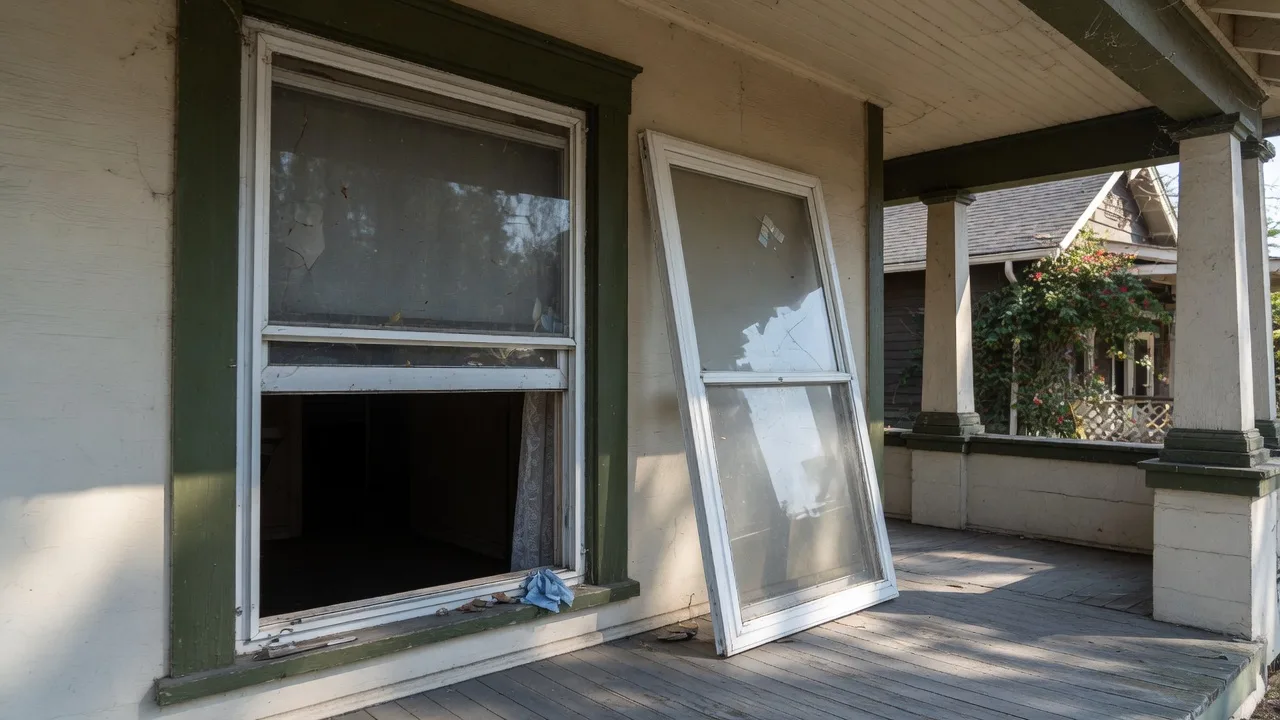
A sash is the moving panel: the wood or vinyl box that holds the glass and slides or tilts in the frame. Sash replacement keeps the frame in the wall and puts a new panel in that frame. It is not glass-only work, and it is not a full window. Window Pro SD is a referral service. We do not mill sashes or sell kits.
Three different jobs people collapse into one search
Window glass replacement versus a full window owns the insulated glass unit. Fog between panes or a cracked lite can be an IGU swap when the sash and frame are still sound. The glass comes out. The panel stays.
Sash replacement is the next step up. The panel itself is the failure: split stiles on a North Park double-hung, a vinyl sash that has racked, a lock mortise that has torn out, or a sash so swollen it will not enter the jambs. The frame, stool, and exterior casing stay. A new sash, or a sash kit for that series, goes back into the existing box.
Full-window work pulls the frame. That is window repair versus replacement and, when the wall opens, full-frame replacement. A new sash cannot save a frame that is rotten at the sill, out of square, or leaking into the stucco.
A sash that will not stay open is usually a failed window balance. The hardware in the jamb carries the panel. Replacing the sash because the balance broke is buying a new panel for a spring problem. Replacing only the balance on a sash that is already split is buying hardware for a panel that will still fail.
Name the part before you name the product. Glass, sash, balances, frame. Four different line items.
When the sash is the right thing to replace
Hung windows in South Park, North Park, Golden Hill, and older coastal cottages are the usual sash jobs. Single-hung and double-hung units are built so the sash can come out. Many vinyl lines tilt in for cleaning. Some manufacturers sell replacement sashes for a given series. Some do not. The licensed pro has to match the series, the dimensions, and the glass makeup. A “universal sash kit” from a national parts site is a different product than a factory sash for the unit in your opening.
The frame has to earn the new sash. Lift the interior stool. Probe the sill. Look at the exterior bottom corners. Soft wood, bubbling paint, or a racked opening means the box in the wall is the failure. A new sash in that box repeats the leak. Rotted window sills and wood window replacement own those next steps.
Aluminum sliders in Mira Mesa and Chula Vista are rarely a sash-kit job in the hung-window sense. The moving panel is still a sash, but the usual repair is rollers, tracks, or a full insert. Do not force a double-hung kit story onto a horizontal slider.
Obscure glass in a bathroom, grids inside the airspace, and Low-E coatings all have to match neighboring sashes or the new panel will read as a patch. Ask for the glass makeup on the order, not only the outside dimension.
Lead paint, balances, and what the pro should write down
Many of these hung openings sit in houses built before 1978. EPA’s Lead Renovation, Repair, and Painting Rule treats whole-window replacement as a renovation. The minor-repair exemption (6 square feet interior / 20 square feet exterior) does not include window replacement, even if the window itself is smaller than 6 square feet. Replacing a pane of glass or fixing a broken window balancer is not “window replacement” for RRP. It is still covered unless it meets minor repair and maintenance (no more than 6 square feet of painted surface per room, no prohibited practices).
A full sash swap can disturb painted stiles, stops, and jambs. Ask the pro whether this sash job is RRP-covered, whether they hold firm certification, and whether they will test or assume lead on a pre-1978 house. Window Pro SD does not hold that certification.
If the sash drops, add balances to the ticket or you will install a new panel that slams. If the sash is the only rotten part and the jambs are solid, keep the frame. If both are gone, stop talking about a kit.
Title 24 can still apply when the glass changes. The 2025 Building Energy Efficiency Standards took effect January 1, 2026. San Diego County sits in Climate Zones 7 and 10, where the prescriptive maximum fenestration U-factor is 0.30. The mandatory maximum U-factor is 0.40. California Energy Code section 150.2(b) is a replacement-fenestration exception. Confirm with the building department whether a sash-only swap is reviewed as replacement fenestration. Do not invent a permit fee.
Inside the City of San Diego, same-size, same-type replacement can use a No-Plan Building Permit under Information Bulletin 203. A sash that keeps the opening is not the same question as a full-frame reset. Ask Development Services. Other cities set their own rules.
What a sash quote should name
Series and manufacturer, or a clear statement that the sash is custom. Width, height, and which sash (upper, lower, or both). Glass makeup, including Low-E, grids, and obscure glass. Whether balances, stops, and locks are included. Whether the existing frame is being reused, and what inspection found at the sill. Whether RRP applies.
California law requires a contractor license when the aggregate contract price for labor, materials, and all other items is $1,000 or more (Business and Professions Code section 7048, threshold amended effective January 1, 2026). Window work sits inside the C-17 Glazing Contractor classification, California Code of Regulations title 16, section 832.17. Confirm the company on the CSLB license check.
Do not treat a national sash-kit price as a San Diego installed price. This site does not publish sash-kit dollar figures. The licensed pro prices the configured panel against the opening they measured.
When to call us
Call when one bid is glass only, one is a sash kit, and one is a full window, and the frame has not been named as sound or failed. A licensed window contractor should inspect the sill, the jambs, and the panel, then write which of the three jobs they are selling. Call us at (858) 400-6418 and we’ll connect you with a licensed local window contractor.