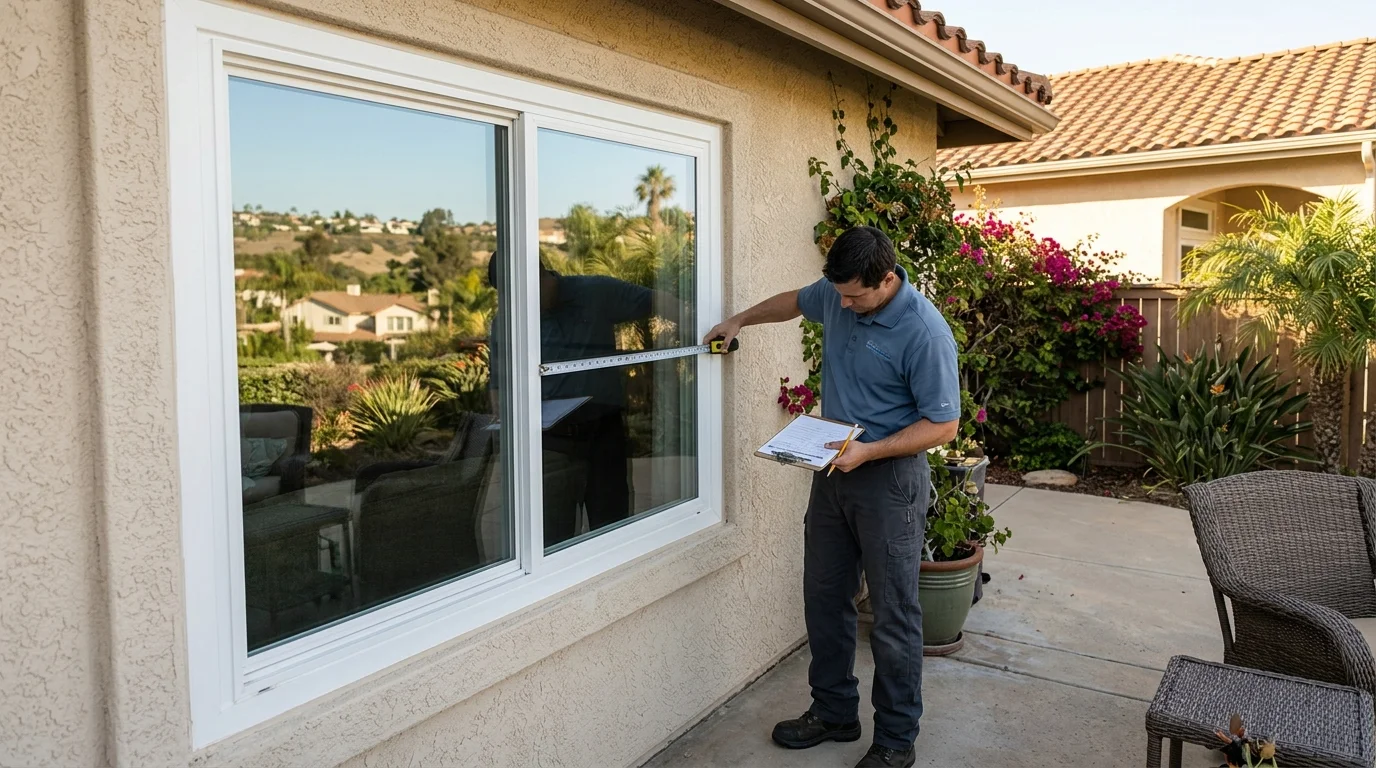
Fog between panes or a fresh crack doesn’t always require a new frame. Window glass replacement keeps the existing window when its sash and frame remain serviceable. It isn’t the right fix when damage extends beyond the glass.
Energy rules can also affect the choice. The 2022 California Energy Code section 150.2(b) included an exception for no more than 75 square feet of replacement vertical fenestration. It allowed a maximum U-factor of 0.40 in all climate zones and SHGC of 0.35 in zones 2, 4, and 6 through 15. The 2025 standards took effect January 1, 2026, but the exact current exception text couldn’t be confirmed. Check the current edition with the California Energy Commission and the department reviewing your address.
What a glass-only replacement actually is
A glass-only job replaces the glazed portion while retaining the surrounding window. On many dual-pane windows, that means replacing the insulated glass unit, often called an IGU. The sash, frame, trim, and wall opening can remain in place when they’re suitable for reuse.
An IGU is the sealed assembly inside the sash. The visible panes are parts of that assembly. A contractor generally orders the complete unit to match the opening rather than separating and rebuilding it at the house.
Single-pane windows are different. Their glass may be installed as one sheet rather than a sealed multi-pane assembly. That’s why “window pane replacement” can describe more than one job. The contractor must identify the existing construction before ordering anything.
Glass-only replacement doesn’t renew the rest of the window. It won’t replace damaged framing, worn operating parts, distorted sash material, or faulty installation around the opening. Those issues need their own scope.
This distinction matters when comparing proposals. One company may quote only the IGU. Another may include the sash that holds it. A third may be proposing complete window replacement. Those aren’t competing versions of one identical service.
Photos can help start the conversation, but measurements and an on-site assessment usually determine the scope. Ask the pro to identify which components will stay. The answer should name the glass, sash, frame, trim, and surrounding opening separately.
The three conditions that have to be true for glass-only to work
Glass-only replacement becomes a practical option when three conditions line up.
First, the retained sash and frame must still be serviceable. They need to hold the replacement glass as intended. Cracks, loose joints, deformation, decay, or damaged glazing channels can change that decision. A window that binds or won’t lock may also have a problem beyond its glass.
Second, a compatible replacement unit must be available. The pro needs accurate dimensions and the correct glass construction. Coatings, tint, grid patterns, thickness, edge details, and spacer appearance can affect the order. A visually close substitute may still look different beside neighboring windows.
Third, the problem must be limited to the glass assembly. A crack or condensation between panes can justify assessing the glass. Water marks around the trim, movement in the frame, or recurring operating trouble can point toward a wider problem. The inspection should separate those conditions before materials are ordered.
Failure of one condition doesn’t automatically require the most invasive option. A complete replacement sash might solve a problem that an IGU can’t. Hardware service may be the actual need. Our broader guide to window repair versus replacement explains those branches without treating every symptom as a full-window job.
Don’t let the visible damage define the entire scope. The broken or fogged pane is simply the easiest part to see. The retained parts decide whether home window glass replacement will be a lasting fit for that opening.
How to check whether your frame is still sound
You can document the window before a contractor arrives. Don’t remove glazing beads, stops, or glass yourself. A careful visual and operating check gives the pro better information without disturbing the assembly.
Start by opening and closing an operable window. Note where it sticks, shifts, or stops. Test the lock normally and record whether the sash sits evenly when closed. Don’t force a jammed sash.
Next, inspect the interior and exterior edges you can safely reach. Look for visible cracks, separated corners, soft wood, bent sections, loose trim, or gaps that change along the frame. Photograph each concern from close range and from several feet away.
Check the wall and sill around the opening. Staining or peeling finishes deserve attention, but they don’t prove where water entered. Roof runoff, exterior joints, irrigation, and the window assembly can produce similar visible clues. Ask the contractor to identify the source instead of assuming new glass will correct it.
Compare the damaged window with a nearby matching unit. Photos of both can reveal differences in grid pattern, tint, hardware, and frame shape. Include a clear image of any manufacturer label or etched marking you can find.
San Diego County location also matters to the assessment. Tell the pro whether the property is along the I-5 coastal corridor, in the central city, east of I-15, in East County, or in the South Bay. Don’t treat location alone as a diagnosis. It gives the contractor context for inspecting the existing materials and matching the replacement.
Sash, IGU, and full window: three different jobs people call the same thing
“Window glass repair” is often used as a catchall. Before accepting a proposal, identify which of these three jobs it describes:
-
IGU or glass replacement: The contractor replaces the glass assembly and retains the existing sash and frame. This is the narrowest scope. It makes sense only when the retained components can accept the new unit.
-
Sash replacement: The contractor replaces the panel that holds the glass. On an operable window, that panel moves within the outer frame. This option can address damage or incompatibility within the sash while leaving the main frame installed.
-
Full-window replacement: The project replaces the window unit, including its frame. The installation may use an insert approach or expose more of the original opening. Our guide to retrofit versus full-frame window installation explains that separate choice.
These labels shouldn’t be used interchangeably. A proposal for “one replacement window” could mean an IGU, a glazed sash, or the complete unit. Each leaves different material at the house.
Ask what happens to screens, locks, balances, grids, trim, and exterior sealant. If those items aren’t included, the proposal should say so. The same applies to painting or finish work around the opening.
The service category also matters. A pro evaluating residential window repair may recommend glass, sash, or hardware work after inspecting the unit. That inspection doesn’t guarantee repair is possible. It should produce a clear explanation of the proposed scope and why the retained components are suitable.
Discontinued lines and why an older window sometimes forces a full replacement
An older window doesn’t need complete replacement merely because of its age. No verified age cutoff determines when glass-only work stops being possible. Compatibility and condition matter more than a date guessed from the home’s appearance.
Product availability can still change the answer. Manufacturers revise frame profiles, sash designs, glazing beads, grids, hardware, and finishes. A replacement sash for an older line may no longer be available. A custom IGU may still be possible if the existing sash can accept it, but that needs confirmation from the contractor ordering the glass.
Sometimes the missing part isn’t the glass. A damaged sash profile, glazing component, or operating part may prevent the new unit from being secured as intended. If no suitable replacement component can be found, the contractor may propose replacing the full window.
Ask how the product line was identified. Useful evidence can include a manufacturer label, etched glass mark, model information, original paperwork, or measurements from the existing unit. “It’s old” isn’t a complete explanation.
San Diego’s housing varies sharply by area. A bungalow near North Park may present a different opening than a newer tract home in inland North County. Even matching windows on one house may have been installed during separate projects. The pro should inspect the actual unit rather than infer compatibility from the neighborhood or building age.
If full replacement is recommended, request the reason in writing. It should identify the failed, damaged, or unavailable component. That lets you compare the full-window proposal with any glass-only alternative on equal terms.
What to ask for in writing before the glass is ordered
Custom glass can be difficult to change after fabrication starts. The written proposal should settle the scope before anyone places the order.
Ask it to include:
- The exact window and room covered by the proposal
- Whether the job replaces glass, an IGU, a sash, or the full window
- Every component that will remain in place
- The ordered dimensions and glass configuration
- Any grid, coating, tint, spacer, or finish being matched
- Work excluded from the quoted scope
- The total price and payment terms
- Who provides any promised warranty and its written terms
- What happens if hidden frame or sash damage appears
- Cleanup and disposal responsibilities
- Any permit or inspection responsibility
Permit language needs special care. City of San Diego Information Bulletin 203 says window replacement requires a building permit. Same-size, same-type replacement can qualify for a No-Plan Building Permit when the existing structure meets the bulletin’s conditions. The bulletin doesn’t clearly settle whether an IGU-only swap is treated the same way.
For an address inside the City of San Diego, ask Development Services: “Is this glass-only or IGU-only scope considered window replacement, and does it require a permit?” Other incorporated cities and unincorporated San Diego County set their own requirements. Ask the authority for the project address the same exact question.
You can also check the individual contractor through the CSLB license lookup. Confirm that the name and license information match the party shown on the proposal.
Window Pro SD doesn’t set the contractor’s price or provide a warranty. Your agreement and payment are directly with the independent local professional, so every promised term belongs in that agreement.
When to call us
Call when cracked, fogged, or damaged glass needs a professional assessment. We’ll help match you with a local pro who can determine whether the IGU, sash, or complete window needs replacement.
Call us at (858) 400-6418 and we’ll connect you with a licensed local window contractor.