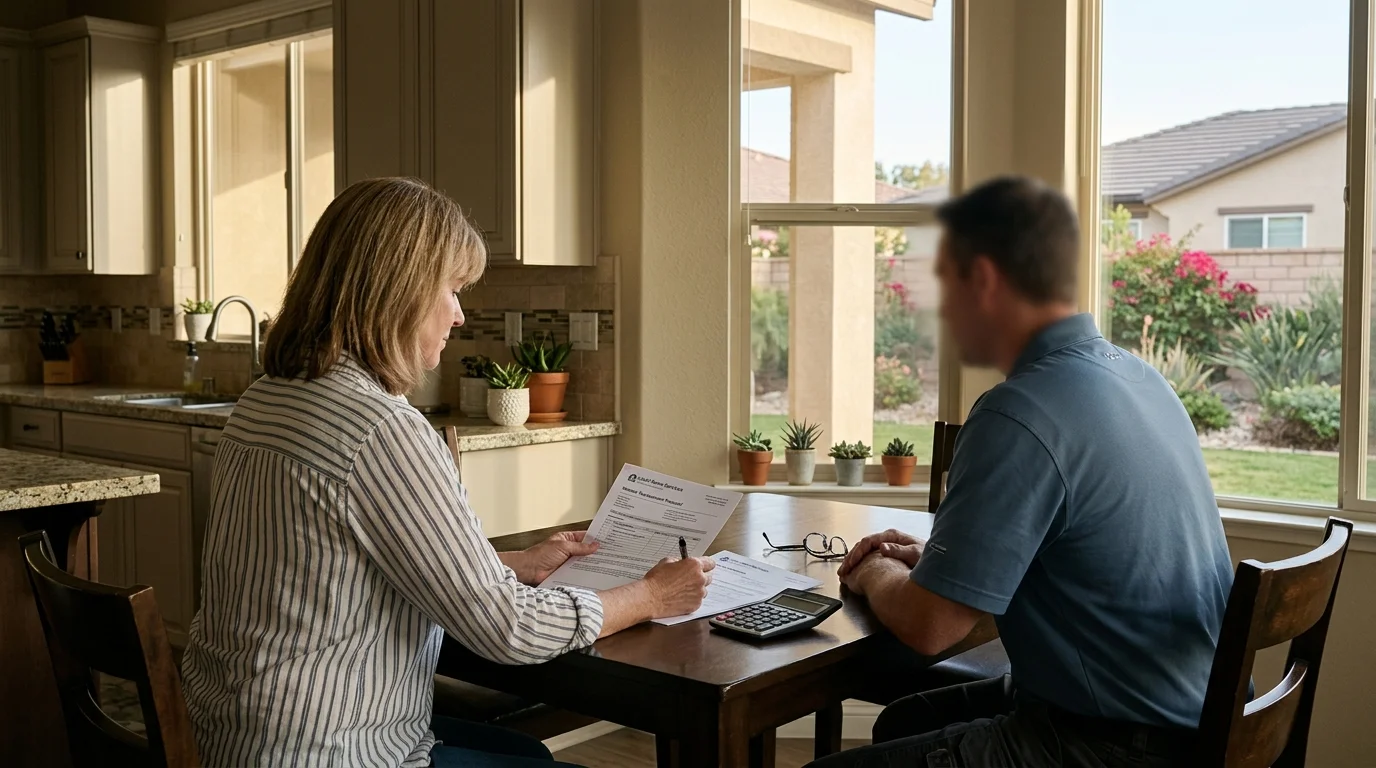
The words you volunteer during a window appointment can shape the conversation. Don’t disclose your maximum budget, a desperate deadline, that you’re skipping other bids, or that you’ve already chosen a product. Keep the discussion focused on written scope, installation details, and comparable terms.
Why the in-home window pitch is built the way it is
Expect the appointment to move between several topics. You may discuss window styles, frame materials, glass options, installation methods, financing, and measurements. The salesperson may also ask whether you’re ready to sign.
That mix can blur three separate decisions: what you need, what’s included, and what you’ll pay. Keep those decisions apart.
Start by describing the problem you’ve observed. Mention a stuck bedroom window, damaged frame, west-facing living room, or difficult patio opening. Give the salesperson useful context without prescribing the answer.
Then ask how each recommendation addresses that specific problem. A vague label such as “premium” doesn’t explain the product, installation method, or included work. Ask for the manufacturer, product line, operating style, glass package, frame material, finish, and installation method.
Local context belongs in that discussion. A homeowner near the coast may ask about exposed hardware and frame materials. Someone in La Mesa may focus on a west-facing room. A North Park homeowner may need the proposal to address the property’s existing openings and any review identified for the project.
Your role isn’t to outtalk the salesperson. It’s to control the order of the conversation. Define the problem, compare proposed solutions, and discuss contract terms last. Our guide to choosing a window installer in San Diego covers the contractor checks that should follow.
The four things that hand over your negotiating position
Some statements reveal more than the salesperson needs. Keep these four out of the opening conversation.
-
Your maximum budget. Don’t begin with the highest amount you could accept. Ask for a written proposal based on the openings and specifications first. You can decide whether it fits your budget after seeing the complete scope.
-
A deadline you’ll pay anything to meet. Share real scheduling needs, but don’t present them as desperation. Ask the contractor to state availability and project assumptions in writing. If the schedule doesn’t work, you can compare another proposal.
-
That you aren’t getting another quote. Even if you like the first presentation, don’t surrender your ability to compare. Tell the salesperson you’re reviewing written scopes. You don’t need to disclose another company’s price or sales pitch.
-
That you’ve already chosen a brand at any cost. Brand preference is useful, but it shouldn’t replace product details. Ask which series, frame, glass package, hardware, and installation method the proposal includes. Two quotes using the same brand name can still describe different projects.
Price searches also need context. If you started with “cheap replacement windows” or “Window World window prices,” use those searches to create questions. Don’t treat a search result as the installed price for your openings.
Ask what’s included before deciding whether something is cheap or expensive. Removal, disposal, interior trim, exterior finish work, permit handling, and damage discovered after removal can change the scope. The written proposal should show which party handles each item.
Today-only pricing and what it actually signals
A today-only price doesn’t prove the proposal is bad. It does signal that you should separate the window decision from the deadline.
Ask for the base proposal in writing. Then ask the salesperson to identify the temporary term separately. The document should state what expires, when it expires, and what changes afterward. If those details aren’t written, don’t rely on them.
You can also ask for a version without optional upgrades. That makes it easier to see the core installation scope. If financing is offered, request the contract price, payment terms, and total financed amount in writing. Compare those terms separately from the windows.
Don’t argue about whether a deadline is real. Bring the conversation back to the proposal. A useful response is: “I’m comparing written scope and product details. Please leave the complete terms with me.”
That sentence doesn’t accuse the salesperson of anything. It simply prevents a countdown from replacing your review.
Window Pro SD doesn’t set contractor prices or financing terms. Homeowners contract with the independent professional directly. For context on the cost categories that can appear in a proposal, read our San Diego window replacement cost guide. Use it to understand the categories, then compare the actual written bids for your home.
How to keep quotes comparable across three companies
Three totals aren’t comparable unless they describe the same work. Give each company the same room-by-room opening list. Ask each salesperson to return a proposal with matching categories.
Record these details for every opening:
- Room and window location
- Operating style
- Manufacturer and product line
- Frame material and finish
- Glass package
- Retrofit or full-frame installation
- Interior and exterior finish work
- Removal and disposal
- Permit responsibility
- Payment schedule
- Written exclusions
Don’t compare one lump sum with another. One proposal may include finish work that another excludes. One may specify a product line while another uses only a broad brand name. Mark every missing field and ask for an updated copy.
Property details should also appear as assumptions. For a Mission Valley condo, record any access or association requirements discussed. For a North Park home, ask whether the proposal assumes any historic review. For a Chula Vista project, ask the salesperson to identify the permitting authority used for the quote.
Don’t let “San Diego” stand in for a specific jurisdiction. Have each proposal name the authority it relies on, if permit work is involved. If the salesperson can’t confirm a requirement, the quote should say it remains unconfirmed and identify who will check it.
Use one worksheet for all three companies. Don’t rewrite their descriptions into your own shorthand. Copy the exact product and scope language so differences remain visible.
The questions that change the conversation
Strong questions make a salesperson commit to details without creating a confrontation. Ask them slowly, and record the answers.
- Which legal company will appear on the contract?
- Which contractor would perform the installation?
- Is this retrofit or full-frame work?
- Which manufacturer, product line, and glass package are included?
- What existing material stays in place?
- Which trim, stucco, drywall, or paint work is excluded?
- Who checks permit requirements for this address?
- How would additional work be approved after removal begins?
- Who provides each warranty, and where are the written terms?
- What would make the final contract amount change?
Verify the proposed contractor through the official CSLB license check. Match the legal name and license information to the company identified in the contract. Our California contractor license-check guide walks through that review.
If energy certification is part of the pitch, ask for the exact product identifier. You can then check the current residential window information published by ENERGY STAR. Don’t rely on a brand-wide statement when the proposal concerns one product.
After asking a question, stop talking. Let the salesperson answer fully. A vague response isn’t proof of wrongdoing, but it is a reason to request written clarification before signing.
What a clean quote looks like
A clean quote is understandable without the sales presentation. Another contractor should be able to read it and identify the proposed product, installation method, included work, exclusions, and contracting company.
Every opening should have a clear description or reference to an attached schedule. Broad labels such as “energy package” or “premium window” need supporting product details. Options should be separated from the base scope.
The quote should also explain how changes are handled. Existing damage may not be visible before removal. The document should identify what remains unconfirmed, who evaluates it, and how additional work would be approved. Don’t accept an open-ended verbal promise.
Warranty language needs the same treatment. Ask who provides the product warranty and who provides any workmanship warranty. Request the actual terms. Window Pro SD doesn’t provide warranties because it doesn’t perform the installation.
Before signing, compare the proposal against your original opening list. Check that oral statements appear in writing. Confirm the contracting party, payment schedule, product identifiers, installation method, exclusions, and permit responsibility.
The lowest total isn’t automatically the cleanest proposal. The most polished presentation isn’t automatically the clearest contract. Choose using written details you can compare after the salesperson leaves.
Window Pro SD matches homeowners with licensed, independent local window replacement professionals. The homeowner contracts and pays the selected professional directly.
When to call us
When you’re ready for field measurements, product-specific options, and a written installation scope, speak with a licensed window replacement professional. Call us at (858) 400-6418 and we’ll connect you with a licensed local window contractor.