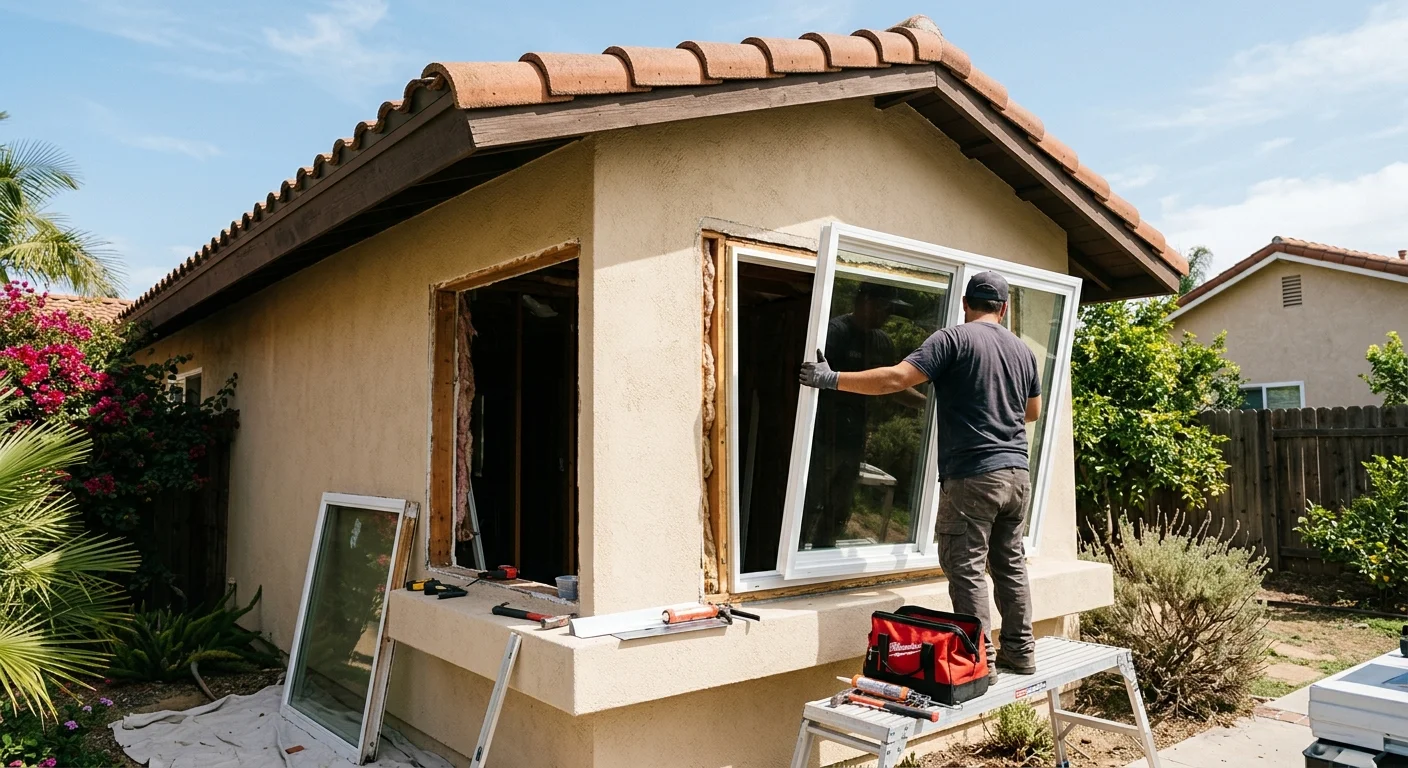
A kitchen-table pitch in Clairemont, Chula Vista, or El Cajon can turn into a signed window contract before anyone measures a second time. People search for a 3 day cancellation window contract california because they want a cooling-off period after that visit. This site’s verified claims ledger does not confirm a day count, a dollar threshold, or a named statute for that right. Confirm the current Notice of Cancellation rules and home-improvement contract requirements with the Contractors State License Board before you sign. Window Pro SD is a referral service. If you sign, you contract with the licensed local pro, not with us.
In-home window pitches and the paper you should leave with
Window sales in San Diego County still happen at the house. A rep walks a North Park bungalow, a Mira Mesa tract home, or an East County ranch, then sits at the table with a packet. The visit is not the same as a stop at a contractor’s own office. Write down your address, the date, and whether anyone came to you, so you can describe the visit accurately when you check the current rules with CSLB.
Leave with copies of everything you saw. That means the unsigned or signed contract, any addenda, product sheets, and any cancellation form they handed you. If they used a tablet, ask for a printed or emailed copy before they walk out. A photo of a signature page on your phone is a backup, not a substitute for the full packet.
Write the contractor’s license number on the first page yourself. Then look it up on the CSLB license check while they are still in the driveway, or that night. California Business and Professions Code section 7048 requires a valid contractor license when the aggregate contract price for labor, materials, and all other items is $1,000 or more. That threshold was amended effective January 1, 2026. The small-job exemption does not apply if someone advertises as a contractor or employs others, and it does not apply if jobs are split to dodge the rule.
Name the company on the contract. Window Pro SD matches homeowners with licensed, independent window replacement pros. We do not hold a trade license, we do not send a crew, and we are not the party on that paper. The pro you hire is.
Do not fill the silence with extra detail about your budget or your timeline. That conversation belongs in what not to say to a window salesman. This page is about the stack of paper after they leave.
If the pitch covered full-frame window replacement, the packet should say so in plain words: openings, frame type, glass, interior and exterior finish, who removes the old units, and who handles patching. Vague lines like “windows as discussed” are how extras show up later.
What this page can state, and what still has to be checked with CSLB
Here is the honest boundary. Search results talk about a three-day cooling-off period, extra days for some buyers, and named cancellation forms. None of those day counts, dollar cutoffs, or statute numbers sit in this site’s verified claims ledger. We will not invent them. A page that guesses a CSLB rule is a liability. A page that points you at the board is usable.
What we can state:
Window Pro SD is a referral service. Matching through this site does not waive, shorten, or extend any cancellation right you may have with the contractor. It does not replace CSLB’s rules.
California Code of Regulations, title 16, section 832.17 describes C-17 glazing work: selecting, cutting, assembling, and installing glass and glazing, including frames, panels, sashes, and doors. Window replacement sits inside that published scope. A license class on a business card is still not proof of a current, active license. Run the number. Our walkthrough is at how to check a window contractor license in California.
What you still have to confirm at cslb.ca.gov, on the current consumer pages for home-improvement contracts and cancellation:
Whether a cooling-off period applies to the contract you were handed, and whether it depends on where you signed (your home, a temporary booth, or the contractor’s regular place of business).
The current day count, how those days are counted (calendar days or business days), and when the clock starts (signing, delivery of a required notice, or another event the board names).
Whether any longer window applies to your situation. Consumer guides often describe extra time for certain buyers or after a declared disaster. Those extra-day figures are not verified in our ledger. Ask CSLB whether any longer period applies to your age, the sales location, or emergency repair work.
What written notice you must send, where it must go, and whether mail, email, or hand delivery is accepted under the current rule. If the packet includes a Notice of Cancellation, keep both copies. Confirm with CSLB whether that form is required, what happens if you never received it, and how to cancel if the form is missing.
Whether a “service and repair” style contract is treated differently from a full home-improvement contract, and what facts (price, emergency request, work already started) change the analysis. We cannot confirm those cutoffs here.
Do not treat a blog, a salesperson’s summary, or this page as the statute. Call CSLB or read the live consumer guidance, then ask: “I signed a window replacement contract at my San Diego County home. What is the current cancellation notice rule, and what is the deadline that applies to me?”
How cancellation differs from a city permit and from HOA review
Canceling a contract is a consumer-contract question. A building permit is a city or county question. HOA design review is a private-covenant question. They run on different clocks, and none of them substitutes for the others.
If you cancel in time under whatever rule CSLB currently publishes, you are dealing with the contractor and the money you already paid. That does not file, void, or refund a permit. It does not withdraw an HOA application. If work never starts, you may still have a permit file sitting with a city counter. Ask the jurisdiction how to withdraw it. Do not assume it dies on its own.
Permit rules are local. The City of San Diego is one jurisdiction. The other incorporated cities and unincorporated San Diego County each run their own counters. This page does not restate city bulletin language. That belongs on a permit guide, not a cancellation guide. If you are inside the City of San Diego, start with Development Services. Everywhere else, call the building department that actually covers the parcel.
HOA review is the third track, and it is uneven across the county. A condo in downtown San Diego, a planned community in Carmel Valley, and a ranch on a large East County lot do not share one architectural process. Coastal north county associations often police exterior color and grid pattern. Inland associations may care more about street-facing consistency. An HOA approval letter is not a contract, and a signed contract is not HOA approval. If the salesperson said “we’ll handle the HOA,” get that in writing as the contractor’s task, with a stop-work line if the board denies the style.
A cancelled contract also does not settle egress, energy, or historic review. Those are installation and permit issues for the job you still want to do with someone else. Keep the product specs from the first packet. They are useful when you compare window replacement quotes the second time, without reusing the first contractor’s paper as if it still binds you.
Deposits, extras, and what to get in writing before anyone measures
Do not pay on a handshake. If you pay anything, tie it to a written contract that names the licensed company, the license number, the address of the job, and the full scope. This site does not publish a legal deposit cap. CSLB’s current home-improvement contract pages are the place to confirm what a contractor may collect up front, how progress payments are supposed to track work, and what happens to that money if you cancel under a valid notice rule.
Ask, in writing, what the deposit covers: materials order, measure, or just a hold on the calendar. Ask whether it is refundable if you cancel inside whatever cooling-off period CSLB says applies, and how they return it. Get the refund method (check, card reversal) on the page. Verbal “we’ll take care of you” is not a term.
Extras are where kitchen-table numbers move. Typical add-ons on San Diego jobs are stucco patch on a 1970s full-frame swap, interior casing on a plaster wall, tempered glass at a bath or stair, and lead-safe work on a pre-1978 house. None of those should appear later as a surprise line. If the first visit was only a sales measure, write that a final field measure happens before fabrication, and that size changes require a written change order you sign.
Do not let anyone start demolition, pull old units, or order custom glass until you have confirmed cancellation timing with CSLB and you still want the job. Ask the board whether starting work changes a cancellation right if one applies. We cannot state a cutoff that is not in the ledger.
Financing addenda, mechanic’s lien warnings, and “notice to owner” pages are part of many California home-improvement packets. Keep them with the contract. Confirm with CSLB what must be in the packet and what you should read before you sign. Do not skip a lien warning because the salesperson called it boilerplate.
If two companies measured the same house, compare line by line: opening count, retrofit versus full-frame, glass package, labor, haul-away, and permit responsibility. The contractor pulls permits when permits are required. We do not. Use the quote guide linked above rather than picking the first table total.
Questions that keep you in control after the salesperson leaves
Sit down with the packet the same night. Phone a second person if you want a witness to the timeline. Then run this list.
Who is the contractor of record, and does that name match the license lookup? If the pitch used one brand and the contract uses another, stop.
Where did I sign: my house, a showroom, or a booth? Write it on the packet. Ask CSLB whether that location changes the cancellation rule that applies to you.
Did I receive a cancellation notice or form, in the same language as the pitch, with an address for sending it back? If yes, keep every copy. If no, ask CSLB what that absence does to the deadline.
What is the stated start date? If it is tomorrow, you have almost no time to read the board’s current rule. Do not agree to a start that outruns your ability to check.
What did I pay, how, and to whom? Card, check, and cash are different paper trails. Keep the receipt with the contract.
Is this a full replacement contract or a small repair? A foggy-pane visit is not the same paper as a whole-house bid. Ask CSLB whether a service-and-repair style agreement is treated differently.
Have I read the scope against the house? Count openings. Walk west-facing glass in Point Loma or Mission Hills, and older aluminum sliders in El Cajon or National City, before you accept “all windows” as a number.
Do I still want this pro after a license check and a quiet evening? If the answer is no, follow CSLB’s current written-notice method. A call is useful as a courtesy. Written notice is what you should confirm with the board. Keep a copy. If you mail it, keep proof of sending.
If you still want the work, you can use the pause to choose a window installer on your timetable, not the salesperson’s.
When to call us
Call when you want a licensed local window contractor for replacement in San Diego County, after you have read the packet and checked CSLB’s current cancellation rules. We match you with independent pros. We are not the contractor on the contract. Call us at (858) 400-6418 and we’ll connect you with a licensed local window contractor.