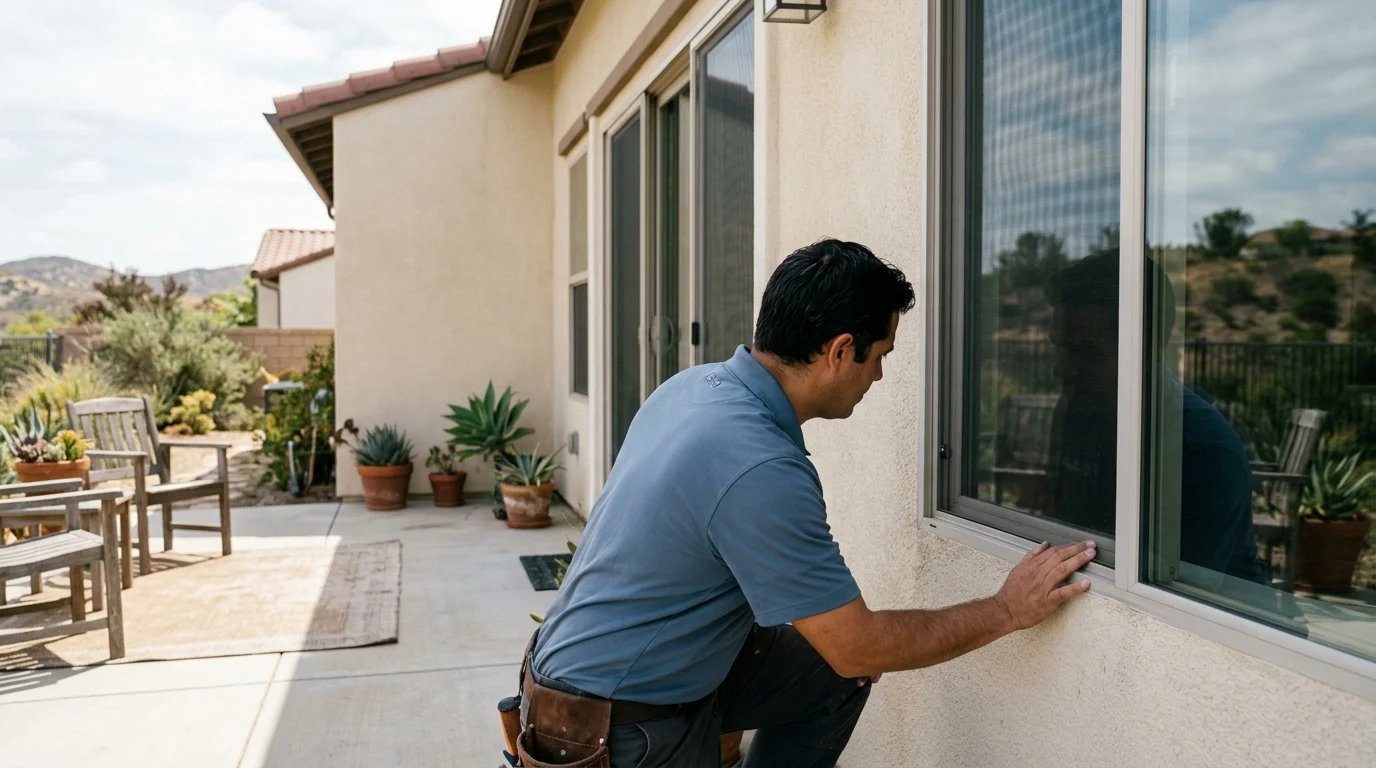
A tempered glass window is one form of safety glazing. California code identifies hazardous locations near doors, tubs, showers, and stairways. However, the exact Chapter 24 distance and height thresholds couldn’t be confirmed from an approved primary source.
California regulations define glazing work under 16 CCR 832.17. For certain wildfire-related exterior assemblies, 2022 California Building Code section 708A.2 provides two compliance paths. The assembly can be multi-pane with at least one tempered pane meeting the safety-glazing section, or it can be tested to SFM Standard 12-7A-2. That rule doesn’t replace a separate hazardous-location review.
What tempered glass is and how it breaks differently
Tempered glass is identified in the building code as a safety-glazing option. That designation matters when a window sits where broken glass could create added danger.
Product pages often describe how tempered glass behaves when broken. Our approved primary-source ledger doesn’t contain a verified fracture description or testing standard for that claim. We won’t turn a familiar marketing explanation into a California code rule.
For a replacement order, product identity matters more than a visual guess. Ask the contractor to document the specified glass for every affected opening. The order should also identify the safety-glazing standard the product meets.
Use these questions before approving the glass:
- What type of safety glazing is specified for this opening?
- Which safety-glazing standard does the product meet?
- How is that compliance identified on the finished unit?
- Will the local building authority accept that product here?
- Does another rule apply to the complete window assembly?
Don’t rely on a photo, tint, tapping sound, or casual verbal description. Those methods couldn’t be confirmed as proof of code compliance. Ask the local building authority what documentation it accepts, then request product documentation and a written specification.
Tempered glass also doesn’t answer every window requirement. Energy performance, emergency escape, historic review, and wildfire provisions may require separate checks. A contractor should review the complete opening, not just the glass label.
Window Pro SD doesn’t manufacture, sell, or install glass. We match homeowners with licensed, independent local window replacement professionals who can inspect the opening and prepare the correct order.
The hazardous locations the code cares about
California Building Code Chapter 24 addresses safety glazing in hazardous locations. The approved ledger confirms the general categories include areas near doors, bathtubs, showers, and stairways. It doesn’t confirm the current California measurements that determine when each category applies.
That gap matters. An online article may quote an inch measurement from another state, an older code edition, or a model code without California amendments. Don’t copy those dimensions onto a San Diego order.
Ask the permit authority this exact question:
Does the current adopted California code require safety glazing at this opening, and what distance, height, area, or walking-surface test applies?
The correct authority depends on the property’s address. A home in the City of San Diego uses City Development Services. Encinitas and Oceanside are coastal North County jurisdictions. Escondido is inland North County. El Cajon is in East County. Chula Vista and National City are in the South Bay. Their local processes shouldn’t be replaced with a City of San Diego answer.
Inside the City of San Diego, Information Bulletin 203 confirms that window replacement requires a building permit. Same-size, same-type replacement can qualify for a No-Plan Building Permit. No-Plan means the permit is issued without plan review. It isn’t a permit exemption.
The structure must have been legally permitted, built, and passed final inspection to use that route. Properties with designated historical resources or within adopted historic districts require historical review. Buildings 45 years or older also require plans for historic review unless the work is exempt.
Read our San Diego window permit guide and confirm the current process with City of San Diego Development Services.
Doors, tubs, stairs, and low glazing
Doors, bathing areas, stairs, and low glazing deserve an opening-by-opening review. Their labels describe the setting, but they don’t settle whether a particular pane requires safety glass.
For a window near a door, record the relationship between the glazing and the door. Include which way the door operates and where people walk. Then ask the contractor and permit authority which current Chapter 24 test applies.
For bathrooms, identify whether the window is near a bathtub or shower. Don’t assume every bathroom window has the same requirement. Don’t assume a small pane is exempt either. The applicable California dimensions couldn’t be confirmed from the approved primary source.
Stairway glazing needs the same discipline. Record the window’s relationship to the stairs, landing, and walking surface. Ask the authority for the current rule rather than relying on an unsourced diagram.
“Low glazing” is also too vague for an order. The approved ledger doesn’t establish a verified sill-height or glass-area trigger for California hazardous locations. Ask what measurements the inspector will use and where each measurement begins.
Wildfire rules involve a different analysis. Under 2022 CBC section 708A.2, covered exterior windows, skylights, and glazed door assemblies must follow one of two paths. One path uses a multi-pane assembly with at least one tempered pane meeting the safety-glazing section. The other uses an assembly tested to SFM Standard 12-7A-2.
Both paths must remain in the conversation. Saying every covered assembly must use a tempered pane would overstate section 708A.2. It would ignore the tested-assembly option.
The property’s jurisdiction and wildfire requirements should be confirmed before ordering. A coastal address, an East County property, and a South Bay home may involve different local offices and site conditions.
How to tell if existing glass is tempered
An existing window shouldn’t be declared tempered from an online photo. Our approved ledger doesn’t verify a visual test, household test, or universal marking format that proves the glass meets California requirements.
Start with the paperwork. Look for the original permit, approved plans, window schedule, invoice, and product documents. These records may identify the unit that was ordered. They also give the contractor something specific to verify.
Next, document the physical window without interpreting it yourself:
- Photograph the full opening from inside and outside.
- Photograph every visible marking or label.
- Record the room and exact wall location.
- Note nearby doors, tubs, showers, stairs, and walking surfaces.
- Give those records to the contractor and permit authority.
Ask the manufacturer or a licensed window professional what the visible identifier means. Then ask whether that documentation satisfies the local authority. A faded or missing record leaves the glass type unconfirmed. It doesn’t prove the pane is ordinary glass, and it doesn’t prove the pane is tempered.
A broken seal, damaged frame, or planned opening change can widen the project beyond glass identification. Full-frame window replacement addresses the complete window and its connection to the surrounding opening. The matched contractor should determine whether that scope fits the property.
City of San Diego owners should also check the building’s age and historic status before changing exterior windows. Information Bulletin 203 sets the historical-review trigger at 45 years for buildings unless the scope is exempt. Designated resources and properties inside adopted historic districts also require review.
Getting it right on the order, not after inspection
A clear window schedule helps keep safety-glazing decisions attached to the correct openings. Give each opening a unique label, then use that label across measurements, product documents, plans, and the final order.
For every opening, record:
- Property address and permit jurisdiction
- Room and wall location
- Window style and replacement method
- Nearby doors, bathing areas, stairs, and walking surfaces
- Required glass type
- Product compliance documentation
- Applicable code edition and permit reference
- Any egress, historic, energy, or wildfire review
Don’t reduce the order to “tempered where required.” That phrase leaves the decision unresolved. Ask the contractor to identify each affected opening and the rule used for that decision.
Bedroom windows may need a separate emergency escape review under California Residential Code section R310. The verified requirements address net clear opening area, opening height, opening width, and sill height. Review our San Diego egress window requirements before changing a bedroom opening.
The contractor’s license classification also deserves attention. Under 16 CCR 832.17, a C-17 glazing contractor’s scope includes selecting, cutting, assembling, and installing glass and glass substitutes. It also covers glazing frames, panels, sashes, and doors. The approved ledger doesn’t establish that C-17 is the only classification allowed for every window project.
Verify the specific contractor and classification through the California Contractors State License Board. Don’t rely on a logo, advertisement, or license claim without checking the state record.
Before authorizing the order, ask the contractor to confirm the glass specification in writing. Ask who will verify the hazardous-location rule with the building authority. For locations outside the City of San Diego, ask the relevant city or county office for its current permit process and adopted code edition.
When to call us
Call when an opening sits near a door, bathing area, stairway, or another location that may require safety glazing. Call us at (858) 400-6418 and we’ll connect you with a licensed local window contractor.