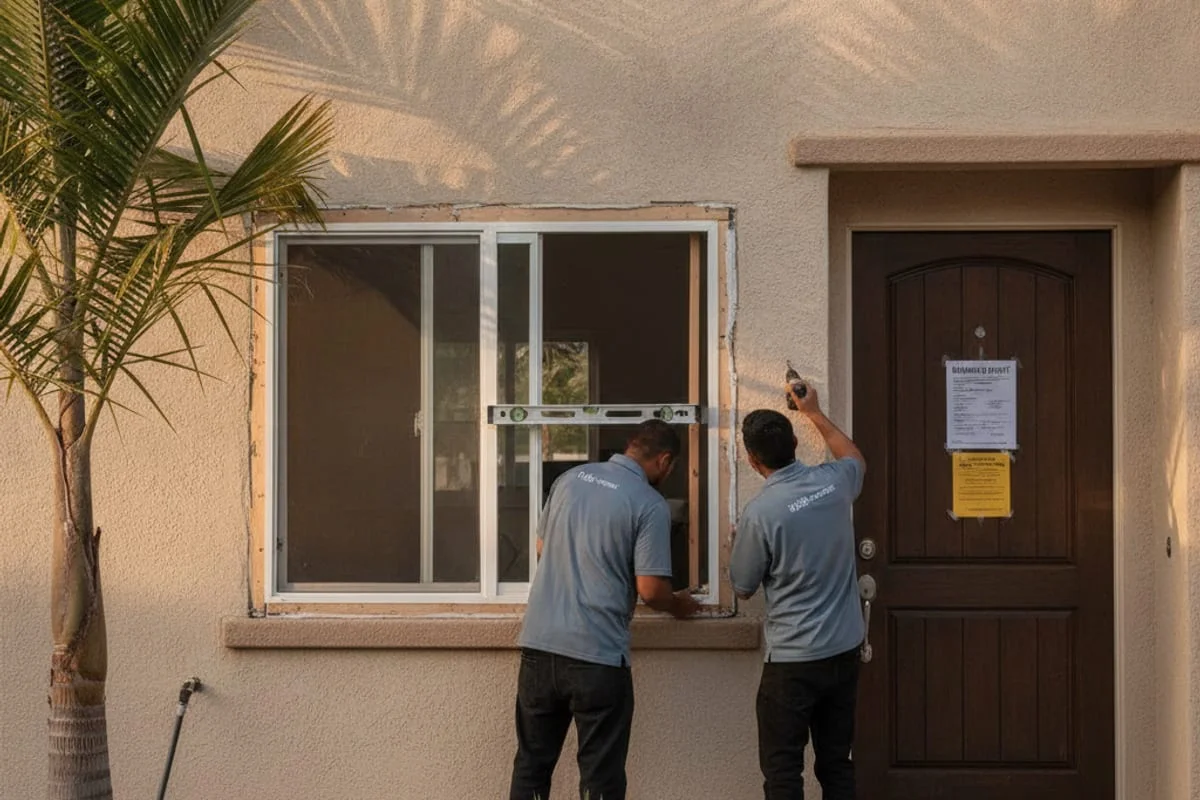
Do you need a permit to replace windows in San Diego
Inside the City of San Diego, a building permit is required for window replacement. Same-size, same-type replacements can use a No-Plan Building Permit under Information Bulletin 203: the new windows must match the existing size and type, with no change to the opening. That path skips plan review. It does not skip the permit. Structures must have been legally permitted, built, and passed final inspection to use it.
Historic review can apply on a designated historical resource, inside an adopted historic district, or on a building 45 years or older unless the proposed scope is exempt.
Other incorporated cities and the unincorporated county each run their own building department. Do not assume the City of San Diego path applies to Chula Vista, El Cajon, or a county parcel. Ask the jurisdiction that serves the address, and require the contractor to write who pulls the permit on the quote.
The common misconception is that a like-for-like replacement never needs a permit. In the City of San Diego that is false: like-for-like still needs a permit, even when it qualifies for No-Plan processing.
Which jurisdiction covers your property
San Diego County has 18 incorporated cities, each with its own building department and permit process, plus the unincorporated county administered by the County of San Diego Department of Planning and Development Services.
Your jurisdiction is the city your property address is in, not the county. A home in Chula Vista applies to Chula Vista’s Development Services Department. A home in El Cajon applies to El Cajon’s Building Division. A home in unincorporated county area (parts of Jamul, Spring Valley, Lakeside, Ramona, and other areas that are not within a city boundary) applies to the County of San Diego.
Look up your property address on San Diego County’s parcel search or on each city’s building department website to confirm jurisdiction before starting any permit process. Your contractor should know which jurisdiction applies to your project based on your address.
What the permit process looks like
The general process for a window replacement permit in San Diego:
Application: Your contractor submits the permit application to the local building department, typically online. Most jurisdictions accept digital applications. The application includes the address, the scope of work (number of windows, method, product specifications), and the NFRC energy compliance documentation (U-factor and SHGC for each window type).
Plan review: Inside the City of San Diego, same-size, same-type replacements can skip plan review under Information Bulletin 203. Changing the opening, historic triggers, or other cities’ rules can require plans. Confirm with the department that serves the address. Do not treat same-day approval as a promise.
Permit issuance: Once approved, the permit is issued and the work can begin. The permit number should be posted at the jobsite during installation.
Inspection: After installation is complete, the contractor schedules a building inspection. The inspector verifies the installation method, the flashing and weatherproofing, the energy compliance (via the NFRC labels on the installed windows), and in sleeping rooms, the egress compliance. The inspector approves or identifies corrections needed.
Permit closure: A passed inspection closes the permit and records the work on the property’s permit history, which is part of the disclosure record for future sales.
What inspectors look for
A window replacement inspection in San Diego County typically covers:
NFRC label verification: The inspector checks that the installed windows have the NFRC label showing the U-factor and SHGC values that were specified in the permit application. The labels should be on the glass or frame at the time of inspection, before any window film or interior finish covers them.
Title 24 compliance: The U-factor and SHGC must meet the minimum requirements for the applicable CEC climate zone. The energy compliance documentation submitted with the permit application identifies what was required, and the inspector verifies the labels match.
Flashing and weatherproofing: For full-frame replacement projects, the inspector checks the flashing at the head and sill, the integration with the water-resistive barrier, and whether the stucco return has been properly closed. For retrofit, the inspector looks at the perimeter seal (backer rod and caulk at the exterior).
Egress compliance: In sleeping rooms, the inspector measures the net clear opening area and checks the sill height. If a bedroom window does not meet the 5.7 square foot minimum or the 44-inch maximum sill height, the installation will fail inspection and require correction.
Structural integrity: If the rough opening was modified, the inspector checks the header sizing and the framing condition.
Permit fees
This site does not publish permit dollar amounts. The City of San Diego and every other jurisdiction set their own fee schedules, and those numbers change. Ask the contractor to list the permit as a line item, or look up the current fee on that department’s site.
The HOA layer
Many San Diego communities have HOAs (homeowners associations) with their own approval process for exterior changes, including window replacement. The HOA approval is separate from the city building permit and must often be obtained before the city permit can be submitted or work can begin.
HOA requirements vary widely. Some HOAs only care that you are staying within an approved color palette (white or beige frames, no black or bronze). Others have specific approved window lines or require architectural review committee (ARC) approval before any exterior modification. Some have no window requirements at all.
Check your CC&Rs and contact your HOA before getting quotes so you can specify the right frame color and style in the quotes. A contractor who installs the wrong color because the HOA approval was not checked has put you in a position of potentially having to replace the windows again.
Common HOA-restricted window situations in San Diego: Rancho Bernardo, Carmel Mountain Ranch, Scripps Ranch, many 4S Ranch communities, Tierrasanta, and planned communities in San Marcos, Carlsbad, and Chula Vista.
Why skipping the permit is not worth it
Window replacement is one of the most commonly permitted-but-sometimes-skipped jobs in San Diego residential construction. Some contractors offer to skip the permit to save time or money. The reasons to decline:
Disclosure at resale. California law requires sellers to disclose known unpermitted work. An unpermitted window replacement shows up as a gap in the permit history when a buyer’s agent or inspector pulls permits. It can derail or delay a transaction or reduce the price.
Warranty implications. Most window manufacturers’ warranties require installation by a contractor holding a current CSLB license, to a permitted specification. An unpermitted installation may void the manufacturer’s warranty.
Insurance implications. An insured loss involving water intrusion at a window may be complicated by an unpermitted installation. Insurance companies use unpermitted work as grounds to reduce or deny claims.
Code violation. An unpermitted installation is a code violation that can require retroactive permitting or removal of the windows if discovered through a complaint or building inspection triggered by another reason.
The permit process for a standard window replacement is usually handled by the contractor. Skipping it to save a fee is a disclosure and warranty problem, not a shortcut.
For more on what makes an installation inspection-ready, see the retrofit vs. full-frame installation guide.
For details on the energy compliance side of the permit process, see the energy-efficient windows and Title 24 guide.
What happens if the inspection fails
If the building inspector identifies a deficiency, the permit will be marked for re-inspection. Common failure reasons: NFRC label not present or not matching the submitted specification, egress dimension not met, flashing not visible or not complete, rough opening framing not per the approved plan.
The contractor is responsible for correcting the deficiency and scheduling a re-inspection. A competent contractor rarely fails an inspection because they know the checklist and complete it before calling for inspection. Ask any contractor you are considering how many re-inspections they have required in the past year.
The bottom line
Inside the City of San Diego, window replacement needs a permit. Same-size, same-type work can use the No-Plan path in Information Bulletin 203; that is still a permit. Other cities and the unincorporated county have their own departments. Ask the department that serves the address, and have the contractor write who pulls the permit on the quote.
Call (858) 400-6418 to get matched with a local window crew. Verify any contractor at cslb.ca.gov before work begins.