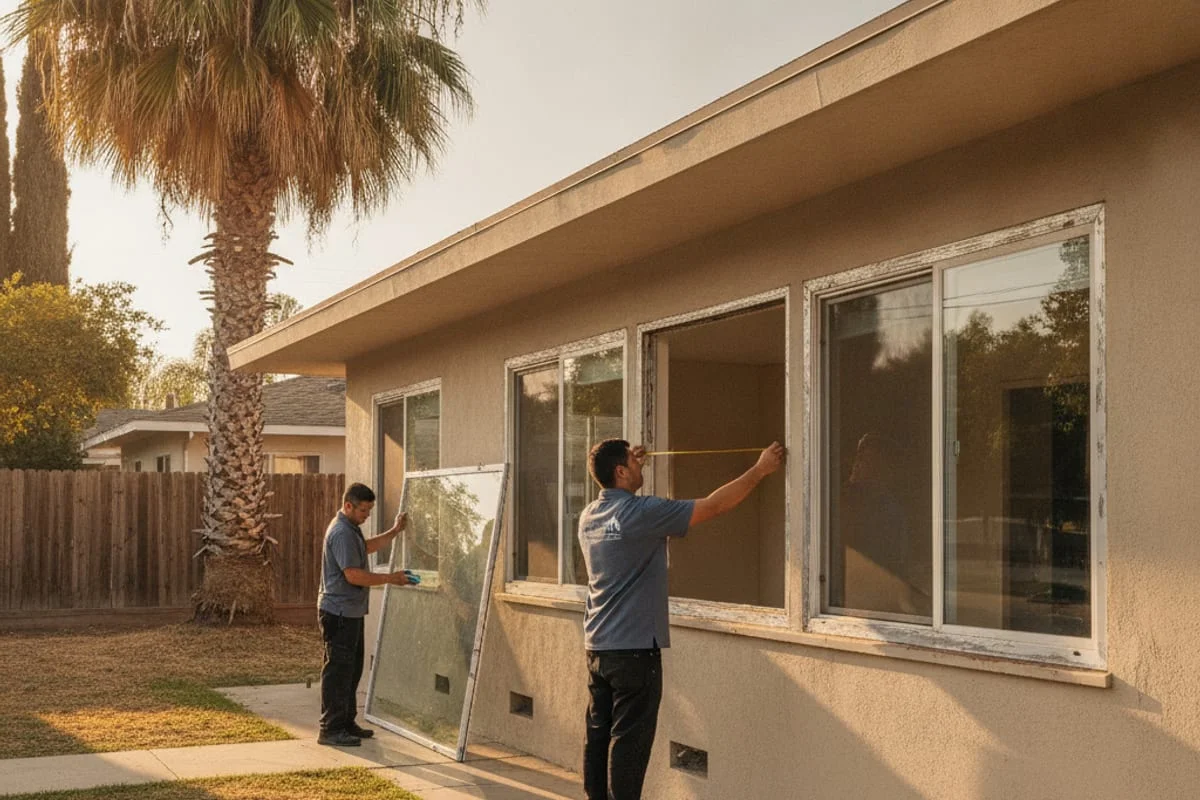
How many San Diego homes still have single-pane windows
A lot. San Diego’s building boom ran from the 1940s through the 1980s, and most of the homes built in that period still have original single-pane aluminum or wood-frame windows. The neighborhoods with the highest concentration of single-pane stock are the established inland communities: North Park, South Park, Normal Heights, Kensington, University Heights, City Heights, Barrio Logan, National City, and much of the older housing in Chula Vista, La Mesa, El Cajon, and Santee.
Coastal communities like Ocean Beach, Pacific Beach, Mission Hills, and parts of La Jolla also have significant single-pane stock in the pre-1970 bungalow and ranch home inventory. These homes have lived without double-pane glass for 40-60+ years, and their owners have adapted, but the thermal and acoustic gap between single-pane and double-pane is real.
What single-pane glass actually does to your home
A single pane of glass has a U-factor around 0.9-1.0, meaning it transfers heat almost as readily as an open window (which would be 1.0). A standard double-pane low-E window has a U-factor around 0.25-0.32. That difference means the glass itself loses heat roughly three times faster in a single-pane window than in a double-pane low-E window.
In practice, what this means in San Diego:
Summer west-facing rooms: A west-facing room with single-pane glass in Kearny Mesa, Santee, or El Cajon on a 95°F afternoon is noticeably warmer than the rest of the house. The glass radiates heat inward from direct sun and from the hot aluminum or steel frame. A double-pane low-E window does not eliminate this, but it reduces it significantly by reflecting a portion of the solar heat before it crosses the glass.
Winter nights: San Diego’s coastal areas do not get cold enough to make single-pane vs. double-pane a major energy bill driver, but inland areas in Escondido, Ramona, Alpine, and the east county see nights that regularly drop to 35-45°F in December and January. Single-pane glass on the north and east sides of a home creates a cold-wall effect where occupants near the windows feel colder than the room thermostat suggests, because the body radiates heat toward the cold glass surface.
Noise: Single-pane glass provides almost no noise attenuation. A home near the 8, 15, 805, or 5 with single-pane windows is noticeably louder inside than a comparable home with double-pane glass. The noise reduction from single to double pane is real and often the most immediate improvement homeowners notice.
Condensation: Interior condensation on a window in winter means the glass surface temperature is below the dew point of the interior air. Single-pane glass is much more likely to form interior condensation because the glass surface temperature closely follows the exterior air temperature. Double-pane glass keeps the interior glass surface warmer because the dead air space between the panes provides thermal buffering.
What the upgrade actually costs
The cost of replacing single-pane windows with dual-pane low-E windows in San Diego is the published dual-pane insert band: $400-$900 per window. Vinyl retrofit on city and FAQ pages is $650-$1,200 installed. Full-frame is $900-$1,600. Fiberglass is a higher material line. Multiply by the actual window count after the installer measures. Do not use a round whole-house number from this article.
A typical 1960s South Park or North Park home with 10-12 original aluminum single-pane windows is that per-window band times the count, after the openings are measured. Larger or non-standard frames in Kensington or Mission Hills land higher because the units are larger, not because of a special neighborhood surcharge.
For homes where the existing single-pane aluminum frames are still structurally sound (not rotted, not physically bent or damaged), retrofit replacement is generally the right method: cheaper, faster, and does not disturb the stucco. For homes where the frames have significant corrosion, bent tracks, or where the window size is being changed for egress compliance, full-frame is the right call.
The homes with the most to gain
Not every single-pane home has the same payback on a double-pane upgrade. The homes with the most to gain are:
Inland homes with west-facing rooms: A single-story ranch in Santee or El Cajon with original west-facing aluminum sliders in the living room is dealing with significant afternoon heat gain. The upgrade has a real comfort impact and a real cooling load reduction.
Homes near major roads or freeways: Single-pane windows do essentially nothing to attenuate traffic noise. The noise reduction from a double-pane replacement with laminated glass on the noise-facing side is among the most appreciated upgrades in terms of daily quality of life.
Homes with comfort complaints around windows in winter: If residents report feeling cold near windows even when the thermostat is set to 68°F, the cold-wall radiation effect from single-pane glass is usually the cause. The fix is the double-pane upgrade.
Homes where window maintenance has become a cycle of repairs: Older aluminum single-pane sliders often have bent tracks, failed rollers, and damaged hardware. If you have already repaired several windows and more are failing, the economics of continuing to repair vs. replacing the whole set tips toward replacement.
What the upgrade does not do
Setting realistic expectations is worth doing. A double-pane window upgrade is not an air-sealing job. If your home has drafts, the drafts are coming from gaps around door frames, attic bypasses, penetrations through the top plate, and weatherstripping failures, not through the glass itself. A new double-pane window in a sloppy rough opening installation will still have drafts at the frame-to-rough-opening interface if the installation is not properly air-sealed.
The energy bill savings from window replacement are real but not dramatic in San Diego’s mild climate. The bigger payback from double-pane replacement is comfort (fewer cold-wall effects, less solar heat gain, less noise) rather than raw energy cost reduction. San Diego’s climate is not cold enough for windows to dominate the heating load the way they do in colder regions.
For homes with significant air sealing problems, the right sequence is air sealing first, then windows. An energy audit from a BPI-certified professional (search at bpi.org) can identify which improvements give the most comfort and energy return for the dollar in your specific home.
Egress requirements when replacing single-pane bedroom windows
California building code requires that every sleeping room have at least one operable window meeting egress requirements: minimum 5.7 square feet of clear opening, 20 inches minimum width, 24 inches minimum height, with the opening within 44 inches of the floor. Many original 1950s-1970s San Diego bedroom windows do not meet these requirements because they were built to older codes.
A same-size bedroom swap in the City of San Diego can use IB 203 and is still a permit. If the opening has to grow for egress, that is full-frame plus framing, not a published Window Pro price. Ask Development Services and have the installer write the path as a line item.
For more on egress requirements and how they apply to window replacement projects in San Diego, see the egress window requirements guide.
Permits and the single-pane replacement project
Inside the City of San Diego, a building permit is required. Same-size, same-type replacements can use a No-Plan Building Permit under Information Bulletin 203, which is still a permit. Other cities and the unincorporated county set their own rules. The inspection, when required, checks the installation, Title 24 labels, and bedroom egress. Do not skip the permit because someone said it is the same hole. See retrofit insert windows and the permits guide.
The bottom line
Single-pane aluminum windows from the 1950s-1980s are the most common replacement target in San Diego’s established neighborhoods. Dual-pane low-E glass is the comfort upgrade on west walls and noisy streets. Price it from the published per-window bands after a measure, not from a round whole-house number.
Call (858) 400-6418 to connect with a local window crew serving San Diego County. Verify any contractor at cslb.ca.gov before signing.