Argon-filled windows are worth considering when the complete window has a better U-factor than a comparable air-filled option. In coastal San Diego, low-E glass usually deserves more attention first. Argon earns a closer look in East County and the Backcountry, where indoor and outdoor temperatures often differ more.
California’s 2025 Building Energy Efficiency Standards took effect January 1, 2026. San Diego County spans climate zones 7 and 10, where the prescriptive maximum fenestration U-factor is 0.30. The replacement exception verified from 2022 Energy Code section 150.2(b) covers no more than 75 square feet of vertical fenestration with a maximum U-factor of 0.40 and SHGC of 0.35. Confirm the current edition with the building department before selecting a product.
What the argon fill is doing in the first place
Double pane windows with argon gas have a sealed space between two panes. Argon occupies that space instead of ordinary air. Its practical role is to help the insulated glass package slow heat transfer through the window.
That doesn’t make the word “argon” a performance rating. The glass, low-E coating, spacer, frame, sash, and assembly all affect the finished window. Installation also matters. A gas name printed on a brochure can’t tell you how the complete unit performs.
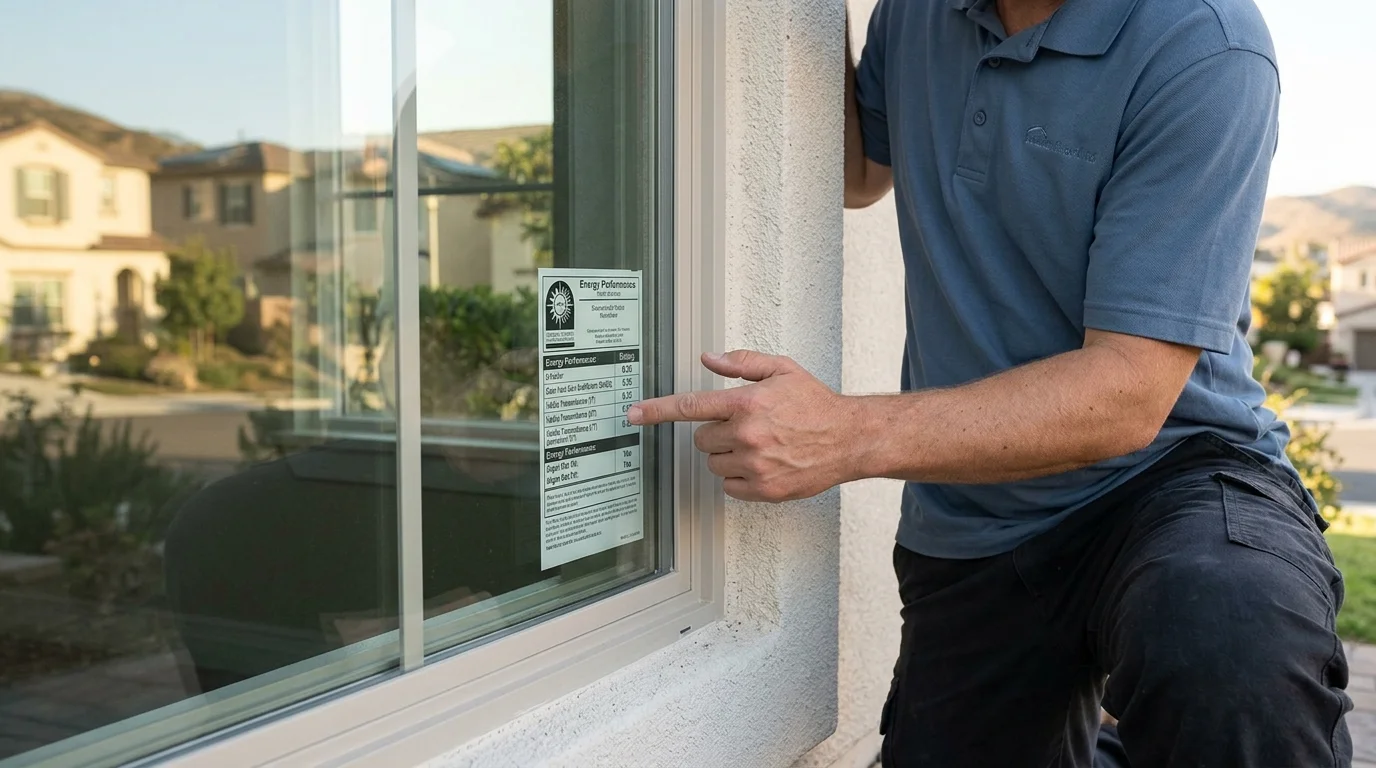
Use the window’s NFRC label for an apples-to-apples comparison. Start with the whole-window U-factor. A lower U-factor represents less heat transfer through the rated unit. Compare products with the same operating style and similar dimensions, since a picture window and an opening casement aren’t the same product.
This approach also keeps sales language in perspective. If two windows both contain argon, they can still carry different U-factors. If an argon-filled option and an air-filled option have the same listed U-factor, ask what practical benefit the upgrade provides in that specific product line.
Homeowners moving from older glass should compare the whole package. Our guide to a single-pane to double-pane window upgrade explains the broader decision. The number of panes, coating choice, frame, and installation method shouldn’t disappear behind one gas-fill feature.
Why the answer is climate-dependent, and San Diego is the mild case
San Diego County isn’t one climate experience. Coastal homes generally face a smaller heating and cooling difference than properties farther inland. That makes argon a supporting feature near the coast, not an automatic reason to choose one window.
A homeowner in Encinitas and one in El Cajon can have different priorities. Coastal exposure may put more emphasis on solar control, frame condition, and how the window handles its surroundings. East County and Backcountry homes may place more value on slowing heat movement between indoors and outdoors.
There’s no verified, product-independent savings percentage for argon gas windows. A salesperson shouldn’t be able to turn the gas fill into a promised reduction on your utility bill. Actual results depend on the complete window, the home, its exposure, the HVAC system, and how the household uses energy.
Use your rooms to guide the comparison. Note which windows face strong afternoon sun. Record where the glass feels uncomfortable to sit beside. Look at which openings receive shade and which remain exposed. Then compare complete rated products for those locations.
The California Energy Commission publishes the state’s current energy standards. Our local guide to energy-efficient windows and Title 24 explains how the verified San Diego U-factor values fit into a replacement decision.
Where in the county it earns its money
Argon deserves the closest comparison in East County and the Backcountry. The decision still depends on the rated window, not the ZIP code alone. Treat location as a reason to examine the upgrade, not proof that every argon package is worthwhile.
Start with rooms where indoor comfort is already difficult to manage. Large exposed windows, home offices occupied through the afternoon, and bedrooms affected by outdoor temperature changes deserve careful product comparisons. Bring those details to each contractor rather than requesting one specification for the whole house.
Next, separate glass packages by orientation. A shaded opening and a west-facing opening may not need identical priorities. Ask the contractor to show the proposed low-E coating, gas fill, U-factor, and SHGC for each package. Don’t accept a product name without its matching ratings.
Coastal homeowners can use the same process. The result may simply put argon lower on the list. If the upgrade comes bundled with the strongest overall option for your needs, it can still make sense. If it adds cost without changing the window’s relevant ratings, ask for a clearer explanation.
No verified local dollar savings could be confirmed for argon-filled windows. The useful question isn’t, “How much does argon save in San Diego?” Ask instead: “What changes on the NFRC label between these two otherwise comparable windows?” That gives you a product-specific answer you can check.
Argon versus krypton versus plain air
Gas names invite an easy ranking, but the complete window matters more. No verified product-independent savings figure or universal performance percentage could be confirmed for argon, krypton, or plain air. Compare tested window packages rather than assuming one fill always wins.
Ask each contractor to quote the same frame series, operating style, pane count, low-E option, spacer, and window size. Then change only the gas fill when the manufacturer offers that comparison. Record the U-factor and SHGC shown for every configuration.
That side-by-side approach exposes vague upgrades. A krypton option may carry a different rating, or it may be packaged with other changes. Argon may be standard in one product series and optional in another. Plain air may appear only in a different glass package. The quote should make those differences visible.
Don’t compare one manufacturer’s argon window against another manufacturer’s air-filled window and credit every rating change to the gas. Too many parts changed at once. Ask for the actual product labels and written specifications.
The ENERGY STAR window resource can help you verify whether a specific product carries current certification for the applicable climate zone. Certification and code compliance are separate checks. A licensed local contractor should identify the product proposed for your opening and explain which standard applies.
What happens as a fill leaks over the years
A universal argon-retention rate or service life couldn’t be confirmed for this page. Don’t accept a fixed percentage or number of years unless it comes from written documentation for the exact window. Different sealed glass units shouldn’t be treated as one product.
If someone says an existing window has lost argon, ask how that conclusion was reached. A visual inspection alone isn’t a verified measurement of the remaining fill. Request the product model, manufacturer guidance, and the diagnostic basis for the recommendation.
Moisture or haze between panes can point toward a sealed-glass problem. It doesn’t automatically tell you the remaining gas level or whether the entire frame needs replacement. A licensed pro can examine the insulated glass unit, sash, frame, and surrounding opening.
The next decision may involve replacing the glass unit or replacing the full window. The right scope depends on what failed and whether compatible parts remain available. Keep the diagnosis separate from assumptions about argon.
Before buying new windows, ask how the manufacturer describes gas fill in its written product specifications. Also ask what its written warranty covers, who handles a claim, and whether labor is treated separately. Window Pro SD doesn’t issue product or installation warranties. Any coverage comes from the manufacturer or the independent contractor, subject to their written terms.
How to weigh it against low-E, which usually matters more here
For many coastal San Diego homes, start with the low-E configuration and complete window ratings. Then consider argon as part of that package. Low-E deserves special attention where direct sun and west-facing exposure drive the room’s comfort problem.
Don’t treat “low-E” as a complete specification either. Ask which coating configuration is proposed and request the matching U-factor and SHGC. The prescriptive San Diego U-factor is 0.30 under the 2025 standards. Larger replacement projects should be evaluated against the current prescriptive requirements.
For replacement vertical fenestration no greater than 75 square feet, the verified 2022 section 150.2(b) exception uses U-0.40 and SHGC-0.35. The 2022 exception text was reached directly, while the current 2025 wording should be confirmed with the building department. Don’t assume the exception applies until the project’s total replacement area and jurisdiction have been checked.
A sensible comparison order is straightforward. Confirm the window fits the opening and project scope. Compare the NFRC ratings. Review the low-E option for the exposure. Then examine whether argon changes the complete unit’s rating enough to justify the quote difference for you.
Our energy-efficient window service connects homeowners with licensed independent contractors who can prepare product-specific options. Window Pro SD doesn’t select products, install windows, set prices, or provide warranties.
When to call us
Call when you need a licensed pro to compare glass packages, inspect a failed sealed unit, or confirm which window meets your project’s current requirements. You can verify a contractor’s license through the CSLB license check. Call us at (858) 400-6418 and we’ll connect you with a licensed local window contractor.