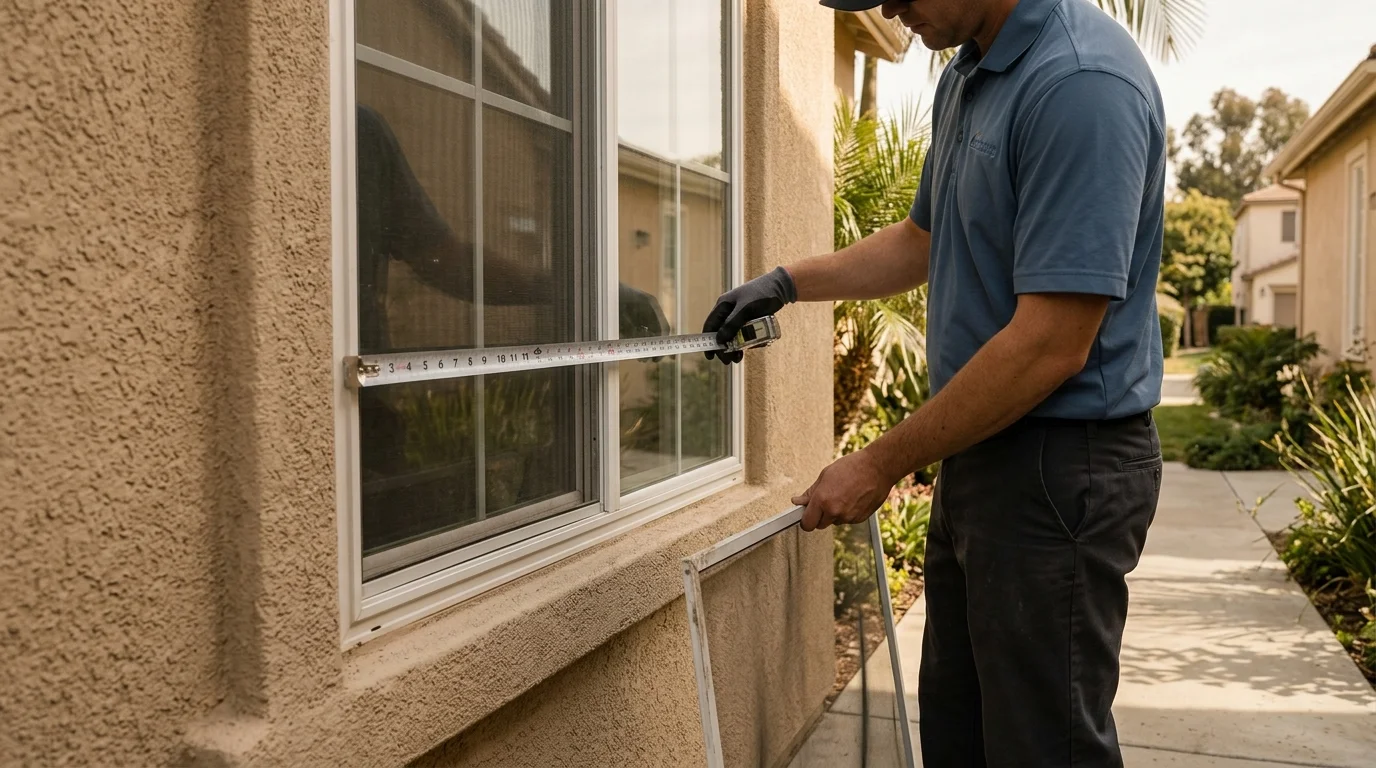
A torn or loose screen doesn’t always require a new frame. For window screen repair in San Diego, patch isolated damage, rescreen a straight frame with sound corners, and replace a frame that is bent, twisted, cracked, or unable to stay seated. That first decision keeps a small mesh problem from becoming a larger purchase.
When a screen is worth rescreening and when the frame is done
Start by checking the screen outside the window, if it can be removed safely. Set it on a flat surface without forcing the corners. Look at the mesh, rails, corner pieces, pull tabs, spline, and overall shape.
A small patch can make sense when the damage is isolated. The surrounding mesh should still feel secure. The patch will remain visible, so consider where the screen sits. A street-facing window in North Park may call for a cleaner result than a less visible utility-room window.
Rescreening keeps the existing frame and replaces the mesh. Consider that option when the frame sits flat, the corners stay together, and the screen still fits its opening. Ask whether the spline and pull tabs are also being replaced. Those details should appear in the written scope.
Replace the full screen when the rails are bent or twisted. Cracked corners, missing hardware, and a frame that pops out also support replacement. Don’t assume a new mesh will correct a frame that no longer matches the opening.
Check the window itself before ordering anything. A damaged track, loose frame component, stuck sash, or deteriorated opening isn’t merely a mesh issue. Our guide to window repair versus replacement helps separate a small repair from a larger window problem.
Measurements also deserve care. Two windows that look identical may accept different screens. Label each removable screen by room and orientation. That step matters in homes with additions, mixed window styles, or past alterations. If the screen is missing, the opening must be measured rather than copied from another room.
Fiberglass mesh vs aluminum mesh in coastal salt air
There isn’t a verified San Diego lifespan for fiberglass or aluminum screen mesh. No countywide winner for coastal homes could be confirmed. Treat any precise lifespan or distance-from-the-ocean claim as unconfirmed unless the seller provides product-specific documentation.
Along the coastal strip, product details matter more than broad material labels. A homeowner in Oceanside, Encinitas, or Imperial Beach should ask how the exact mesh, coating, frame, corners, and fasteners are intended to handle the property’s exposure. “Coastal grade” alone isn’t enough information.
For fiberglass mesh, request the manufacturer and product name. Ask for the mesh specification, care instructions, exposure limits, and written warranty terms. Check a sample for visibility, color, stiffness, and how it looks from inside the room.
Use the same process for aluminum mesh. Ask whether the product has a coating intended for coastal conditions. Request any testing or maintenance guidance supporting that description. Confirm which frame and fastener materials will be paired with it. The complete assembly matters, not only the mesh.
Avoid choosing from a tiny online photo. Compare full-size samples in daylight. Look through each sample from the room where it will be installed. Then view it from outside. Dark mesh, bright frames, and different weave patterns can change the appearance.
The coastal strip isn’t the whole county. An inland North County home in Escondido may present different priorities than a home near the water in Encinitas. Describe the actual window location and exposure when requesting recommendations. Our guide to windows for coastal salt air in San Diego covers the larger window assembly when the issue extends beyond the removable screen.
Solar screens and west-facing rooms in East County
A west-facing room in El Cajon, La Mesa, or Santee presents a different decision from a torn insect screen. The goal may include afternoon comfort, glare control, privacy, or preserving a clear view. Put those goals in order before selecting a solar screen.
Verified solar-screen performance figures for San Diego couldn’t be confirmed. Neither could a promised reduction in room temperature, cooling costs, or solar heat gain. Ask the seller for documentation tied to the exact product. A general statement about “solar mesh” doesn’t establish how a specific screen will perform on your window.
Test a sample at the actual opening when possible. View it during the late-afternoon period that concerns you. Check the room’s brightness, exterior view, color shift, ventilation, and street-facing appearance. Someone working beside a west-facing window may rank glare above the view. Another homeowner may prefer more daylight.
Ask for a written product specification. It should identify the mesh, color, frame, attachment method, and applicable manufacturer guidance. If pets, children, or frequent screen removal affect the choice, include that in the request. Don’t assume one product serves every opening.
Keep screen performance separate from window performance. A solar screen doesn’t answer questions about failed glass seals, damaged sashes, drafts, or the window’s energy rating. If the project changes from screen work to full window replacement, review current guidance from the California Energy Commission. The applicable requirements depend on the replacement scope and current code edition.
East County isn’t interchangeable with the coast or South Bay. Describe the room’s direction, shade, window type, and daily use. That information gives a pro a clearer basis for comparing samples without relying on unsupported countywide claims.
What to confirm about price and timing
A verified San Diego market price or completion time couldn’t be confirmed. Independent shops and pros set per-screen charges, mobile-service fees, shop minimums, material upgrades, and turnaround estimates. Confirm those terms before authorizing work.
Ask for a written scope that separates rescreening from full-frame replacement. It should identify the number of screens, exact mesh, frame work, corners, spline, pull tabs, measuring, removal, and reinstallation. If the screen leaves the property, confirm how each opening will be labeled.
The quote should also state what can change the final amount. A damaged frame discovered after mesh removal may alter the scope. Missing screens require measurements and may need new frames rather than rescreening. Ask the provider to contact you before adding work.
Use these questions when comparing proposals:
- Is this a patch, rescreen, or complete screen replacement?
- Which exact mesh and frame materials are included?
- Are new spline, corners, tabs, or attachment hardware included?
- Does the scope cover measuring, removal, and reinstallation?
- What happens if the existing frame can’t be reused?
- Who provides any written product or workmanship warranty?
- When will the completed screens be available, and what could change that schedule?
Don’t assume an estimate, inspection, pickup, or delivery is free. Window Pro SD doesn’t set prices, collect payment for the work, or issue warranties. The homeowner contracts with and pays the independent professional directly.
A clear proposal matters more than a headline price. One quote may cover mesh only, while another includes damaged corners or a replacement frame. Compare the same scope before choosing. For problems involving the window rather than its removable screen, review our window repair service referral page.
Doing it yourself vs handing it to a pro
DIY rescreening can be reasonable for a removable screen that sits at ground level and has a sound frame. You need a stable work surface, correctly sized mesh, matching spline, a spline tool, and a safe way to trim the excess. Confirm the materials before removing the old mesh.
Label the screen’s room and orientation first. Photograph the pull tabs and hardware. Remove the old spline carefully, clean the channel, and inspect the frame on a flat surface. If the frame separates, twists, or won’t lie flat, stop before spending time on new mesh.
Tension requires patience. Too little can leave the mesh loose. Too much can pull a light frame out of shape. Work gradually around the channel, then check the frame against the opening before final trimming. Keep the cutting tool directed away from the finished mesh and frame.
Hand the job to a pro when several screens are missing, frames don’t match, corners keep separating, or access is awkward. The same applies when the screen problem reveals a damaged track, stuck sash, broken glass, or deterioration around the window opening. Those conditions may require broader diagnosis.
Screen-only licensing requirements couldn’t be confirmed. If a provider’s licensing status matters for the proposed scope, use the California Contractors State License Board license check. Ask the CSLB which classification, if any, applies to the exact screen work and contract amount. Don’t rely on a logo or an unsupported claim.
A screen-only permit rule also couldn’t be confirmed for San Diego County’s separate jurisdictions. If the work changes the window assembly or opening, ask the building department with authority over the property: “Does this exact scope require a permit, and what documents are required?” City of San Diego properties can start with Development Services. Other cities and unincorporated areas have their own authorities.
When to call us
Call when screen damage comes with a bent window frame, broken glass, damaged track, stuck sash, or an opening that no longer holds the screen. Those signs may need evaluation by a licensed window replacement professional rather than a mesh-only repair.
Call us at (858) 400-6418 and we’ll connect you with a licensed local window contractor.