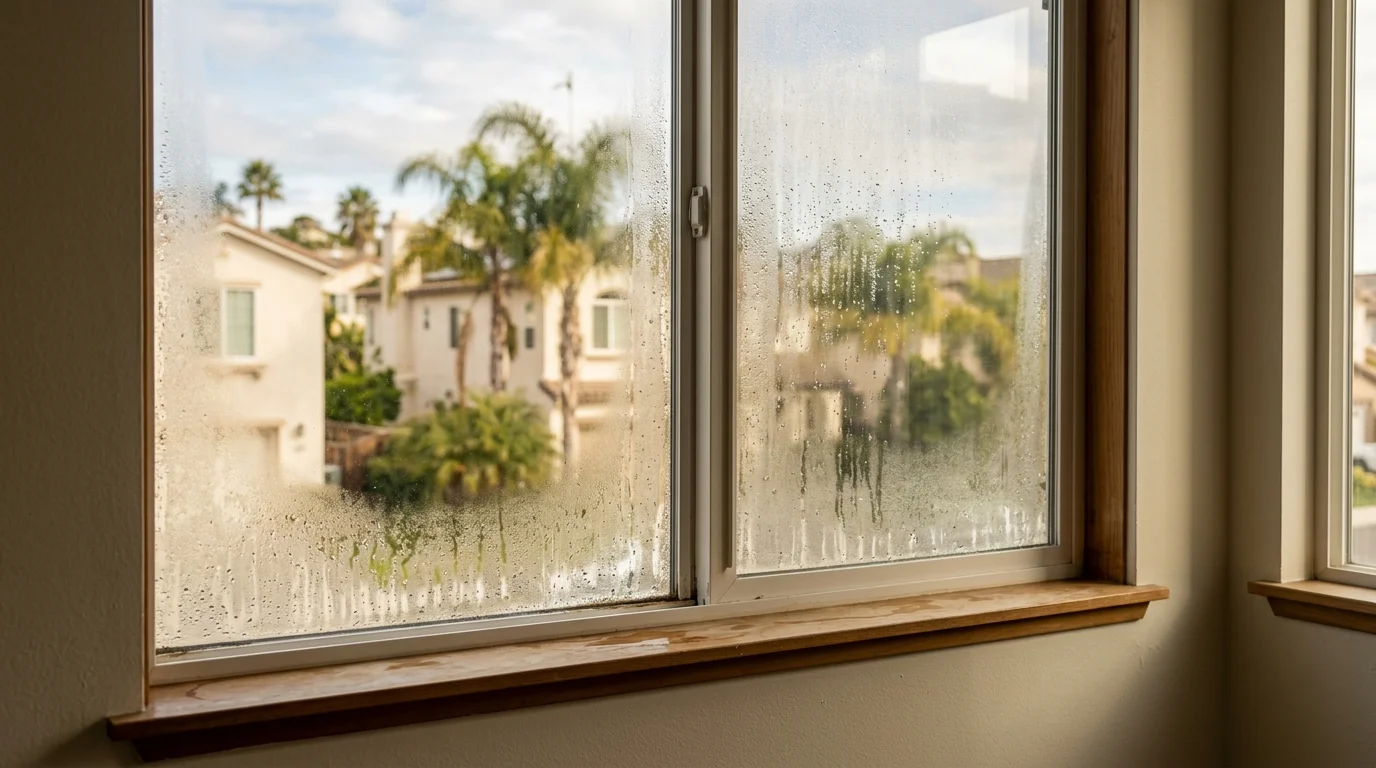
Condensation on the inside of windows usually means humid room air has reached cool glass. It doesn’t automatically mean the window has failed. Moisture trapped between two panes is different because you can’t wipe it from either exposed surface.
Finding the wet side first prevents the wrong repair. It can also save you from replacing a usable window.
Which side of the glass is wet, and why that answers everything
Start with a clean, dry cloth. Wipe the glass from inside the room. If the moisture disappears, it was on the interior surface. Indoor humidity and a cool pane are the main issue to investigate.
If the room side is dry, check the exterior when it is safe and accessible. Moisture outside the window is exposed to different conditions. It shouldn’t be confused with condensation inside the room or fog trapped within the window.
The third location is between the panes of a dual-pane unit. That moisture can’t be reached from either side. It may look like fog, streaks, or a cloudy patch that remains after both exposed surfaces are cleaned. This pattern points toward a problem inside the sealed glass assembly.
Use this quick check before changing anything:
- Wipe the room-side glass.
- Check whether the exterior surface is wet.
- Look through the glass from several angles.
- Note whether the moisture clears as conditions change.
- Photograph the pattern before wiping it away.
Those details give a window professional a much better starting point. “The window is foggy” can describe three separate conditions. “The room-side surface was wet at sunrise, but it wiped clean” is far more useful.
Interior-surface condensation is a humidity problem, not a window defect
Room-side condensation forms when moisture in indoor air collects on cooler glass. People often call this window sweating inside. The water is visible on the window, but the pane may only be the first cold surface where the moisture appears.
Everyday activities can add moisture indoors. Cooking, showering, drying clothes, and keeping doors open during damp weather can all affect room conditions. Closed blinds or heavy curtains may also limit air movement across the glass.
The pattern matters. Condensation across several windows suggests a room or household condition. Moisture limited to a bathroom after a shower points toward a local source. A single window that stays wet while nearby windows remain clear deserves closer inspection.
Don’t treat the word “inside” as proof that moisture is between the panes. Searchers asking “why is there condensation on my windows inside” often mean the surface facing the room. That moisture can be touched and wiped away. Between-pane fog can’t.
A window can still contribute if its interior glass becomes cooler than nearby units. However, surface moisture alone doesn’t prove the frame, glass, or installation is defective. Reduce the indoor moisture, improve airflow, and compare the window with similar openings before deciding it needs replacement.
Condensation trapped between the panes is a failed seal, and that is different
Dual-pane windows contain two pieces of glass in one insulated assembly. When fog or moisture appears in the space between them, cleaning the exposed glass won’t remove it. That is the key difference from room-side condensation.
A failed sealed-glass assembly doesn’t always mean every part of the window must be replaced. Depending on the window design and its condition, a professional may discuss replacing the glass assembly or replacing the full unit. The frame, sash, hardware, and surrounding opening all affect that decision.
Don’t drill the glass or rely on a surface treatment to diagnose the problem. First confirm that the moisture truly sits between the panes. Reflections, dirty screens, exterior residue, and room-side water can look similar from across the room.
Our guide to window repair versus replacement covers the broader decision, including problems that extend beyond the glass. Homeowners considering a move from single-pane glass can also review the dual-pane upgrade service.
Keep the two symptoms separate. Wipeable room-side moisture calls for an indoor moisture check first. Persistent fog inside a sealed unit calls for an inspection of that unit. Replacing windows before identifying the location can leave the original moisture problem untouched.
Why the coastal marine layer makes this worse from Ocean Beach to Encinitas
San Diego’s coast can bring damp air close to homes. In neighborhoods from Ocean Beach through Encinitas, open windows and doors can let that air move indoors. Cooler overnight glass then becomes a visible collection point for room-side moisture.
The coastal pattern isn’t uniform. A home near the water may have different exposure from one behind a ridge or farther inland. Window direction, shade, airflow, and indoor habits also change what appears on the glass.
Morning timing offers a useful clue. Note whether the moisture appears after a cool, damp night and clears later. Compare west-facing, shaded, and sun-exposed windows. Also compare rooms with open doors against rooms kept closed.
Salt residue and condensation can appear together, but they’re different problems. Residue remains after water dries and may affect frames, screens, or hardware near the coast. Our guide to windows for coastal salt air in San Diego explains what to inspect in exposed properties.
Inland homes aren’t excluded. El Cajon, La Mesa, Poway, and inland North County can still develop room-side condensation when indoor moisture meets cool glass. The coastal marine layer is one possible contributor, not a complete diagnosis. Track the location, timing, and surface before blaming the window.
What to try before anyone quotes you a window
A short observation period can separate a room condition from a window problem. You don’t need a humidity percentage or a replacement proposal to begin. Focus on changes you can see and repeat.
-
Dry the glass completely. Note whether moisture returns to the same area. Water along the entire lower edge tells a different story from one isolated corner.
-
Use existing ventilation. Run bathroom and kitchen exhaust fans during moisture-producing activities. Check whether the fan is moving air and whether the window remains clearer afterward.
-
Improve room-side airflow. Open blinds and curtains. Move objects that block air near the glass. Compare the result with a similar unobstructed window.
-
Track the timing. Record whether condensation appears overnight, after cooking, after showers, or during coastal fog. A simple phone photo can preserve the pattern.
-
Compare several windows. If every bedroom window is wet, the cause is less likely to be one defective unit. If only one matching window is affected, show that difference to the pro.
Also inspect where the water begins. Condensation forms on the glass surface. Water entering around trim during rain may be a separate leak. Don’t cover that distinction with caulk before someone identifies the source.
These steps aren’t a substitute for an inspection. They help you describe the symptom clearly and avoid a premature replacement decision. A licensed local pro can then examine the glass, sash, frame, and surrounding opening with better evidence.
When the window really is the cause
The window deserves closer attention when moisture stays between the panes, visible frame damage appears, or one unit behaves differently from comparable windows. Drafts, difficult operation, damaged seals, and recurring moisture in the same isolated area are also useful details to report.
The next step should be diagnosis, not an automatic whole-house replacement. Ask the contractor to identify whether the issue involves the glass assembly, sash, frame, installation, or indoor conditions. If replacement is recommended, ask which observed defect supports that recommendation.
For product comparisons, check current certification details through ENERGY STAR. Certification doesn’t diagnose condensation, but it can help when comparing replacement products. Before hiring, verify the contractor through the California Contractors State License Board.
Window Pro SD is a referral service. We match homeowners with licensed, independent local window replacement professionals. The professional performs the inspection and work, and you contract with that professional directly.
When to call us
Call when moisture is trapped between panes, the frame shows damage, or surface condensation continues after you’ve reduced indoor moisture and improved airflow. Call us at (858) 400-6418 and we’ll connect you with a licensed local window contractor. The line plays a recording-consent notice, then takes a recorded and transcribed message so we can make the referral.