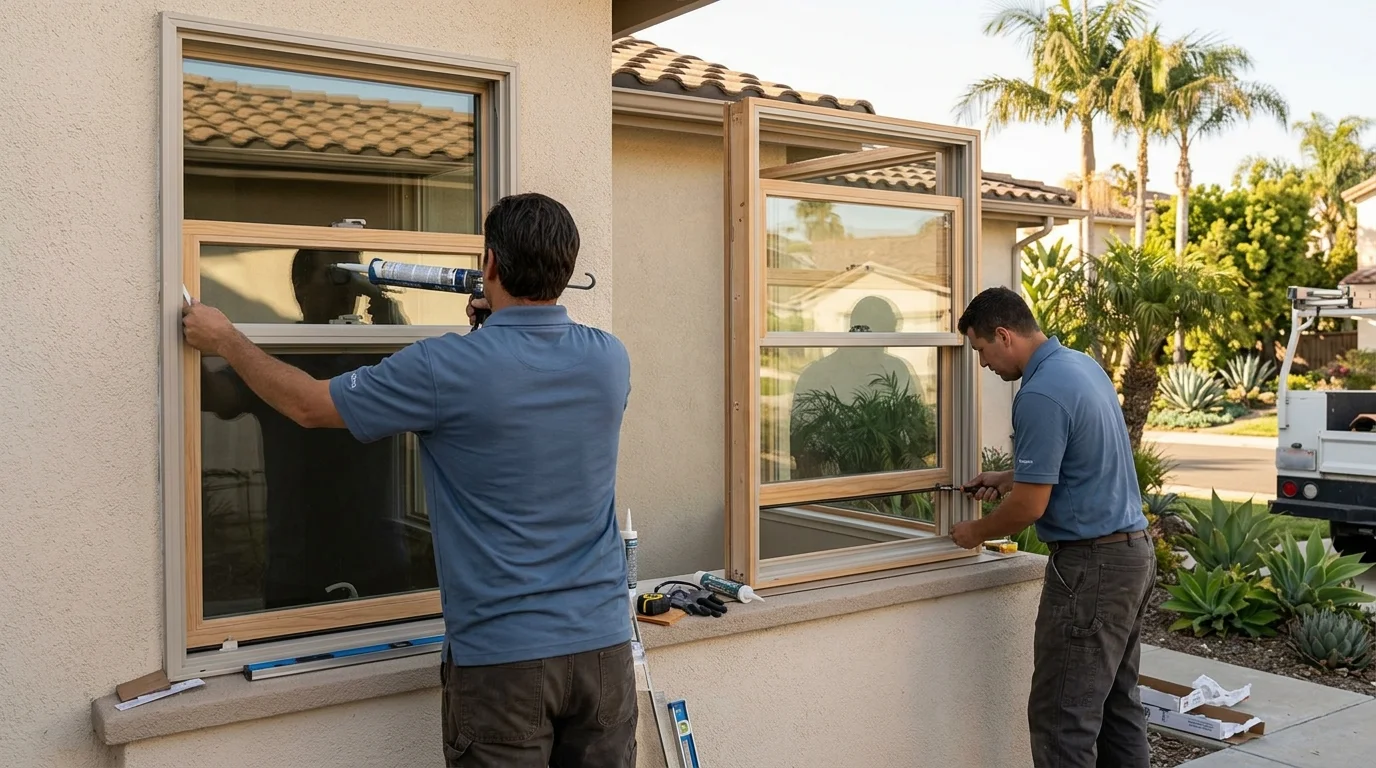
The choice comes down to one moving part. Double hung windows have movable upper and lower sashes, while single-hung windows have a fixed upper sash. Choose double-hung when upper-sash operation or easier interior cleaning solves a real problem.
Code comes before style when the opening serves a bedroom. The 2022 California Residential Code, Section R310, sets a 5.7-square-foot minimum net clear opening, reduced to 5.0 square feet for grade-floor or below-grade openings. It also sets a 24-inch minimum clear height, a 20-inch minimum clear width, and a 44-inch maximum from the floor to the bottom of the clear opening.
The one mechanical difference that drives the price gap
A single-hung window has one operating sash. The lower sash moves, while the upper sash stays fixed. A double-hung window lets both sashes move within the frame.
That second movable sash adds operating hardware. It may also add another balance system and more points to inspect during maintenance. This mechanical difference is the clearest reason two otherwise similar windows may receive different quotes.
A verified price gap between these styles couldn’t be confirmed. Independent contractors provide the project quotes, so we won’t publish a percentage, average, or per-window premium. Product lines, frame materials, glass packages, dimensions, and installation methods can all differ between quotes.
Ask a contractor to compare the same opening under matching specifications. The frame material, glass, color, installation type, and hardware should remain consistent. Then ask for separate line items for single-hung and double-hung options. That comparison shows what the extra operating sash changes for your project.
Don’t assume the higher quote automatically produces a better window. A fixed upper sash may suit a room where nobody needs top-sash ventilation or interior access to the exterior glass. Double-hung becomes valuable when its second moving sash serves a specific purpose.
Our overview of sliding, casement, and double-hung windows can help you compare the main operating styles before requesting product-specific quotes.
Why hung windows are less common in San Diego than sliders
No verified countywide inventory shows how many San Diego homes have sliders, single-hung windows, or double-hung windows. We can’t support a measured claim that sliders outnumber hung windows by a specific amount. That figure should stay out of a buying decision unless a reliable local source publishes it.
What you can compare is the existing opening. Sliders operate from side to side. Hung windows operate vertically. A broad opening may already favor a sliding layout, while a taller opening may accept a hung configuration more naturally. Changing styles still requires a contractor to check the frame, clear opening, and installation method.
This matters across San Diego County’s distinct areas. A homeowner near the coastal strip may be comparing a different opening and exposure than someone in inland North County. Central San Diego, East County, and the South Bay also contain many different home layouts. The existing window and wall opening matter more than a countywide generalization.
San Diego County spans California climate zones 7 and 10. Under the 2025 Building Energy Efficiency Standards, which took effect January 1, 2026, the prescriptive maximum fenestration U-factor is 0.30 in both zones. The mandatory maximum is 0.40.
The replacement exception documented in the 2022 Energy Code covers no more than 75 square feet of vertical fenestration. It permits a U-factor no greater than 0.40 and an SHGC no greater than 0.35 in the listed zones. Confirm the current edition and project treatment through the California Energy Commission or the applicable building department.
Use our San Diego window styles guide to compare operation without assuming one style fits every neighborhood.
Cleaning from inside: who actually benefits
Interior cleaning is a strong reason to consider double-hung windows, but only when the selected product supports it. A movable upper sash doesn’t automatically mean the sash tilts inward. Tilt hardware depends on the specific window design.
Some single-hung products also let the lower sash tilt inward. Their fixed upper glass still needs another cleaning approach. Before buying, ask the contractor to demonstrate exactly which sashes tilt, how they release, and how they return to position.
Interior access matters most when exterior access is awkward. That could include an upper floor, a narrow side yard, fixed landscaping, or an opening above a sloped section of the property. A ground-floor window with easy exterior access may offer less reason to pay for an additional movable sash.
Consider the person doing the cleaning, too. Tilt latches, sash weight, and reach should feel manageable. Try the display unit if one is available. Don’t rely only on a brochure image showing the sash tilted inward.
Cleaning convenience also shouldn’t decide the frame material. Vinyl, fiberglass, and aluminum involve a separate set of choices. Our guide to vinyl, fiberglass, and aluminum windows explains how to evaluate that decision independently.
Ask these questions for each proposed model:
- Do both sashes move?
- Does each sash tilt inward?
- Can the sash be removed for cleaning?
- What cleaning steps does the manufacturer specify?
- Which hardware needs routine inspection?
The answers should refer to the exact model on the quote. “Double-hung” describes how the sashes operate, not every cleaning feature included with the window.
Egress and bedroom openings
A double-hung label doesn’t prove that a bedroom opening meets egress requirements. The window must provide the required net clear opening when it’s open. Frame dimensions alone don’t settle that question.
Under 2022 California Residential Code Section R310, the standard minimum net clear opening is 5.7 square feet. Grade-floor and below-grade openings have a 5.0-square-foot minimum. The clear opening must also reach at least 24 inches high and 20 inches wide. The bottom of the clear opening can’t sit more than 44 inches above the floor.
All applicable measurements must be checked together. Meeting the minimum width and height doesn’t establish that the window also meets the required clear area. Ask for the manufacturer’s net clear opening data at the exact ordered size, then have the contractor compare it with field measurements.
Switching from single-hung to double-hung won’t automatically solve an undersized egress opening. The sash travel, frame profile, and ordered dimensions affect the available opening. A slider or casement may produce a different clear opening within the same wall space, but the contractor must verify the actual proposed unit.
For properties within the City of San Diego, window replacement requires a building permit. City Information Bulletin 203 says same-size, same-type replacement can qualify for a No-Plan Building Permit when the existing structure was legally permitted, built, and passed final inspection. A No-Plan permit is still a permit.
City historical review also applies to designated historical resources and properties inside adopted historic districts. A building 45 years or older requires plans for historical review unless its scope qualifies for an exemption. Check the current process with San Diego Development Services.
Other incorporated cities and unincorporated San Diego County have their own authorities. Ask the relevant department: “Does this replacement require a permit, and does changing the operating style or clear opening require plans?” Our San Diego egress window guide provides more context for bedroom openings.
Which rooms justify the upgrade
Double-hung windows make sense where the upper sash will actually move or tilt. If that feature won’t be used, a single-hung model may meet the room’s practical needs with fewer operating parts.
Start with bedrooms. Egress measurements take priority when the opening must serve as an emergency escape and rescue opening. Compare the exact clear-opening data for every proposed style before considering cleaning or appearance.
An upstairs room may benefit from inward-tilting sashes when exterior glass is hard to reach. Confirm that both sashes tilt on the quoted model. Some double-hung windows move vertically without offering the cleaning feature you expected.
In a bathroom, opening the upper sash while leaving the lower sash closed may suit the room’s layout or privacy plan. The specific California safety-glazing measurements for hazardous locations couldn’t be confirmed from accessible California Building Code text. Ask the building department or licensed contractor whether the window’s position near a tub, shower, door, or stair requires safety glazing.
For a kitchen opening, test the reach before choosing. A window above a counter or sink can place locks and lift rails farther away. The ability to move both sashes offers little value if the controls aren’t comfortable to reach.
Living rooms and common areas usually call for a broader style comparison. Consider whether the opening favors vertical or sideways movement. Look at furniture placement, screens, hardware access, and the direction each sash travels.
A ground-floor room with straightforward exterior access may not need tilt-in cleaning. A single-hung window can remain a sensible choice when only the lower sash needs to open. A slider may fit better when the opening is wider than it is tall.
Window Pro SD doesn’t sell a window brand or perform installations. We match homeowners with licensed, independent local window replacement pros. Before signing, verify the contractor through the CSLB license check and compare written quotes using the same specifications.
When to call us
Call when you need a licensed professional to measure the opening, compare sash operation, check bedroom egress, or confirm the permit path. Call us at (858) 400-6418 and we’ll connect you with a licensed local window contractor.