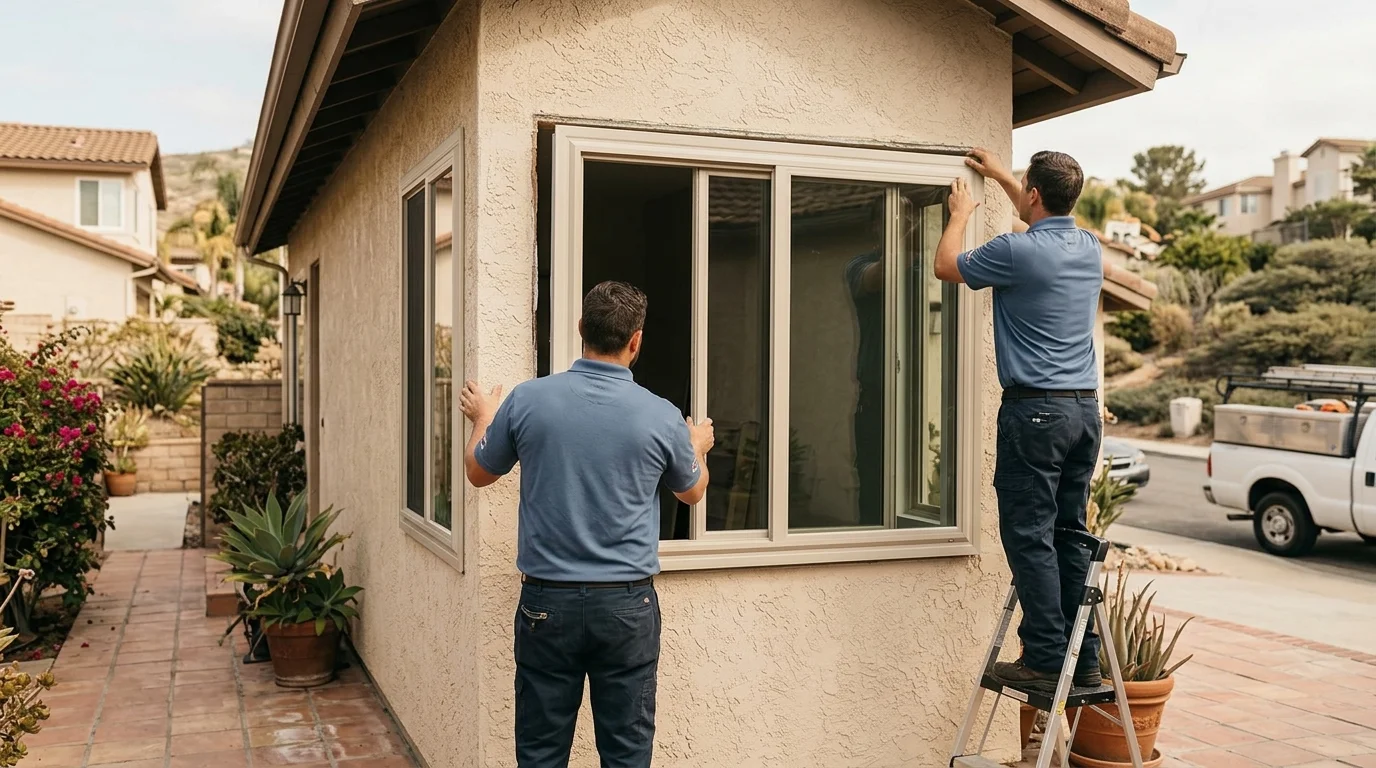
Casement windows are the stronger choice when sealing and directional breeze capture lead the decision. Sliding windows make more sense where an open sash can’t project over a walkway, patio, or planting bed. The right answer changes by room, exposure, and the space outside the wall.
A style change can also affect the permit path. City of San Diego Development Services Information Bulletin 203 says window replacement requires a building permit. Same-size, same-type replacements can qualify for a No-Plan Building Permit when the bulletin’s conditions are met. A slider-to-casement change isn’t the same type, so ask the City which submission applies. The window-replacement permit rules for other San Diego County jurisdictions couldn’t be verified. Ask the city or county building department serving the property which permit path applies before changing styles. Bedroom windows also need a separate egress review under 2022 California Residential Code Section R310.
How each one seals, and why that decides the comparison
A casement window has a sash hinged along one side. A crank or handle moves that sash outward. When closed, its locking action pulls the sash against the frame’s weather seals.
A sliding window works on a different path. One sash moves horizontally along a track. Its seals must allow that movement, and the meeting rails seal where the sashes overlap. Dirt in the track, worn rollers, and damaged weather stripping can affect how the unit closes.
That mechanical difference gives casement windows an advantage when a firm closed-sash seal is the main goal. It doesn’t mean every casement outperforms every slider. Frame construction, sash alignment, hardware, glass, and installation still matter. A poorly fitted casement can disappoint, while a well-built slider may suit the opening well.
Don’t choose from a showroom label alone. Close and lock the sample. Check whether the sash sits evenly against the frame. Ask for the specific product’s tested air-leakage information. Confirm which seals and hardware components can be replaced later.
San Diego homeowners should also separate window style from glass performance. A room facing afternoon sun in Poway or El Cajon has a different problem from a shaded coastal bedroom. The sash style controls operation. The glass package, frame, and installation control other parts of the result.
Our San Diego window styles guide covers the broader choices. For this comparison, start with the seal, then judge how the window must open.
Coastal breeze capture on the west side of the county
An open casement sash can redirect moving air into a room. Hinge side matters because the projecting sash changes how air reaches the opening. Two casements arranged around a room may also behave differently when the breeze changes direction.
A slider doesn’t project beyond the wall. Opening it exposes part of the framed area while the moving sash remains parallel to the glass. That makes its airflow less directional, but it also avoids placing a sash in exterior space.
Along the coastal strip, don’t choose from a map alone. A home in Oceanside can have different airflow at the front and rear elevations. The same is true in Encinitas, La Jolla, Point Loma, and Imperial Beach. Nearby buildings, fences, courtyards, trees, and slope position can redirect the breeze.
Visit each opening during the hours when the room feels stuffy. Note the direction of the moving air. Then decide which hinge side would catch it without sending the sash into a path, railing, or planting area. If the opening faces a narrow side yard, a slider may fit the available space better.
Casements can work well where the exterior swing stays clear. Sliders often earn their place beside patios, passageways, and other tight areas. On upper floors, ask how each unit will be cleaned and serviced from a safe position.
Breeze capture is useful, but it shouldn’t override fit. A window that blocks circulation outside creates a new problem while solving the indoor one.
Hardware wear in salt air
Casement and sliding windows put different parts to work. A casement commonly uses an operator, hinge arms, locks, and connection points. A slider commonly relies on rollers, tracks, meeting rails, and a latch. Product designs vary, so inspect the actual unit being proposed.
Coastal exposure makes that hardware review more important. Salt and exterior debris can collect on exposed components. No verified countywide hardware lifespan or service interval could be confirmed for this page. Follow the manufacturer’s written care instructions for the exact window instead of relying on a generic schedule.
Ask the contractor to identify the material and finish used on exterior hardware. Don’t judge it by color or appearance. Request product documentation, then ask which moving components can be replaced without removing the entire frame.
Operation should feel controlled and consistent. Try the sample several times. A casement crank shouldn’t be awkward to reach behind a deep counter. A sliding sash shouldn’t require a strained grip or uncomfortable body position. Compare the full-size unit when possible because a small display may not reflect the opening in your home.
For coastal homes from Carlsbad through Coronado, maintenance access deserves a place in the decision. Can you reach the track, hinges, and screen without leaning outside? Can ordinary debris be removed according to the maker’s instructions? Will nearby stucco, trim, or landscaping obstruct service?
Our page on sliding, casement, and double-hung windows can help frame the conversation with a local pro. The useful question isn’t which style has no maintenance. It’s which hardware system fits the exposure and the way you’ll use it.
Screens sit on opposite sides, and that matters
On a common outward-opening casement, the screen sits inside the room. The sash opens beyond it. A typical sliding window places its screen on an exterior track. Confirm the arrangement on the specific product because configurations can differ.
An interior casement screen remains visible when the window is closed. It can also affect access to the handle, depending on the design. Ask to operate the window with the screen installed, not removed for display.
A slider’s exterior screen moves on its own track. That keeps the screen outside the room, but it also places the screen assembly in the exterior environment. Check how easily it moves, lifts out, and returns to its track. Ask how replacement mesh or a damaged frame would be handled.
Room use can settle the choice. Over a kitchen sink, reach distance may matter more than exterior appearance. Beside a patio, the outward swing of a casement may conflict with furniture or foot traffic. In a bedroom, the screen can’t substitute for checking the window’s actual clear opening against current egress rules.
Screens also don’t determine acoustic performance. Traffic from Interstate 5, Interstate 8, or a nearby arterial reaches the entire window assembly. Glass construction, frame design, seals, and installation all belong in that review. Our guide to window noise reduction in San Diego explains what to compare without promising a fixed noise reduction.
Where each style earns its place in a San Diego floor plan
Casement windows earn their place where the sash can swing freely and the homeowner values a firm closing action. They can suit rooms where directing an available breeze matters. They’re less comfortable beside exterior paths, tight side yards, or objects that occupy the swing area.
Sliding windows fit openings where outward projection would cause trouble. They can work beside patios, walkways, and landscaping because the sash stays within the window’s plane. They also suit wide openings where horizontal operation feels natural to the room.
Apply those principles by exposure, not countywide stereotypes:
- Along the Oceanside, Encinitas, and coastal San Diego strip, test actual airflow and inspect the proposed hardware documentation.
- In Rancho Bernardo, Escondido, Poway, and other inland areas, weigh direct sun, shade, ventilation, and glass performance separately.
- In North Park, City Heights, and other central neighborhoods, check exterior clearance near paths, side yards, and neighboring structures.
- In La Mesa and El Cajon, inspect each sun-facing room instead of choosing one style for every elevation.
- Across Chula Vista, National City, San Ysidro, and Imperial Beach, compare coastal exposure and exterior clearance one opening at a time.
Mixed plans are often sensible. A kitchen can favor one operating style while a patio-facing room favors another. Matching every window may create visual consistency, but it can also ignore how each opening functions.
Keep code questions separate from preference. Bedroom openings must be checked for current emergency escape requirements. A changed opening size may require a different permit review. Historic review can also matter within the City of San Diego. Information Bulletin 203 requires it for designated resources, properties in adopted historic districts, and buildings 45 years or older unless the proposed scope is exempt.
Before ordering, mark the full casement swing outside with removable tape or a simple cardboard guide. For a slider, stand where you’ll operate it and test the expected reach. Those checks expose floor-plan conflicts that a catalog image won’t show.
When to call us
A style change, altered opening, bedroom egress concern, or damaged frame needs review by a licensed window replacement professional. Verify the contractor through the CSLB license check before signing a contract. Call us at (858) 400-6418 and we’ll connect you with a licensed local window contractor.