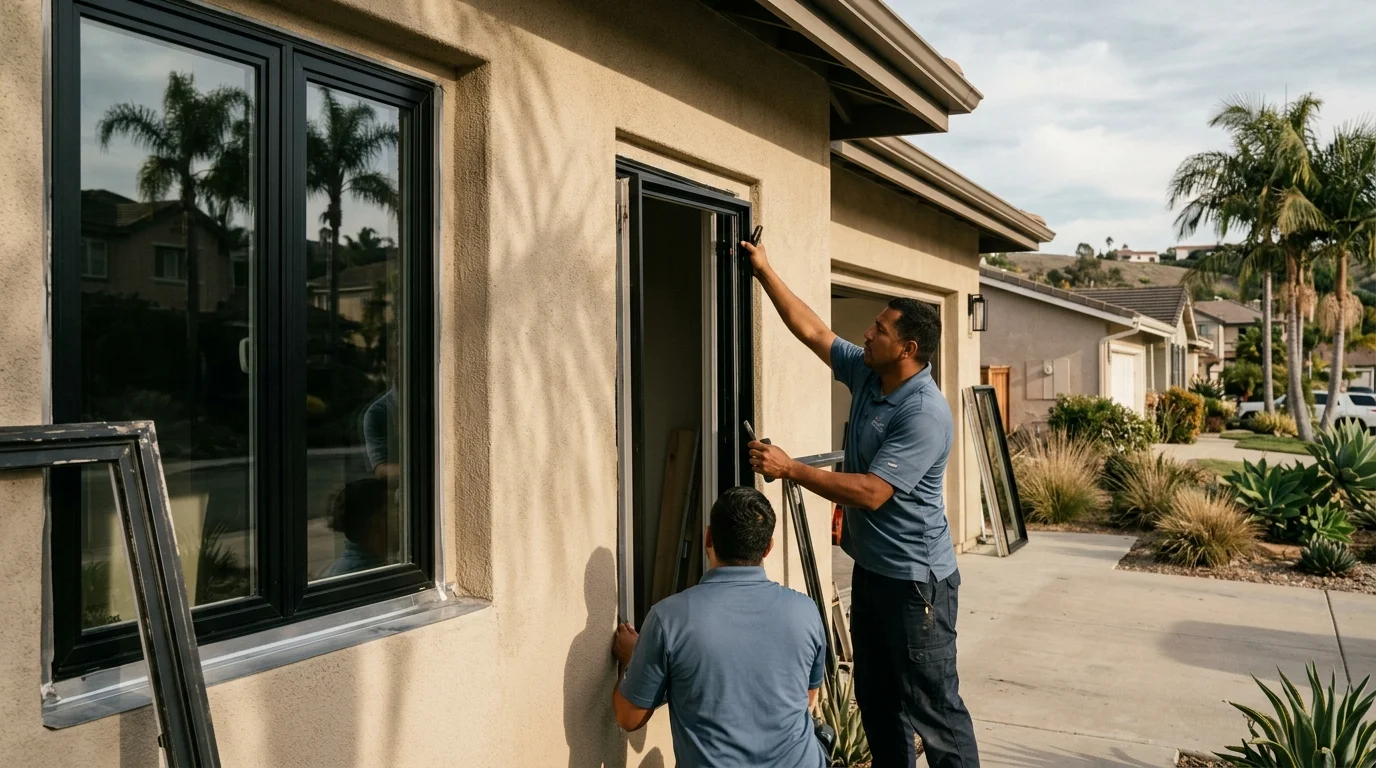
Black window frames can work well in San Diego, but exposure matters. A west-facing frame in El Cajon faces a different heat load than a north-facing frame near Del Mar. Check the material, finish approval, and warranty terms before ordering.
Why every remodel photo has black frames now
Black frames create a strong outline around the glass. They can sharpen light stucco, pale siding, and warm wood finishes. From inside, they can also frame an outdoor view like a picture.
That contrast explains much of their appeal. It fits modern additions, updated ranch homes, and industrial-inspired interiors. The look appears across remodel photos because it reads clearly on a small screen. Whether it suits your house is a separate decision.
Start with the architecture, not the trend. A dark frame may feel natural on a North Park remodel with dark trim. The same frame might compete with the original details on another home. Look at the roof, fascia, doors, and permanent exterior finishes together.
San Diego’s varied housing also changes the decision. A shaded courtyard window in Chula Vista doesn’t receive the same exposure as an uncovered opening in La Mesa. One color doesn’t behave or look identical across both settings.
Black inside and black outside aren’t the only option. Some window lines pair a dark exterior with a lighter interior. That can preserve the exterior contrast without surrounding every room in black. Availability depends on the exact manufacturer, series, material, and finish.
Before choosing, view a physical sample against the house. Check it during morning and afternoon light. Renderings can help with proportions, but they can’t show the finish under your actual sun exposure.
Dark frames and heat: what actually happens on a west elevation
A dark exterior surface absorbs more solar energy than a light one. In direct sun, that means a black frame can become warmer. The practical question isn’t whether this happens. It’s whether the specific window system and finish are approved for that exposure.
West-facing openings deserve close attention. They receive strong afternoon sun when many homes already feel warm. Inland locations such as El Cajon, Santee, and La Mesa can present a tougher exposure than a shaded north wall near the coast.
Don’t judge whole-window performance from frame color alone. The frame construction, glass package, opening style, installation, shading, and surrounding wall all matter. A black finish doesn’t tell you the window’s energy rating.
Look at the opening before looking at colors. Note nearby eaves, patio covers, trees, neighboring buildings, and reflected light from paving. Compare exposed upper-story windows with protected ground-floor openings. The same house may need different conversations on different elevations.
For a hot west wall, ask the pro and manufacturer direct questions:
- Is this exact dark finish approved for this frame series?
- Are there exposure limits or special installation instructions?
- Does the approval change by frame material or window size?
- Can you review the written finish and warranty documents before ordering?
If afternoon heat is the main concern, read our guide to reducing west-facing heat gain in San Diego. It covers the broader opening rather than treating frame color as the only variable.
Which frame materials handle a dark finish and which do not
There isn’t one safe answer for every product carrying the same material label. A black vinyl frame from one series may use a different finish or construction than another. Fiberglass and aluminum-clad products also vary by manufacturer and product line.
With vinyl, don’t assume that every black color is approved for every opening. Ask whether the color is part of the factory catalog for that exact series. You’ll also want written confirmation that the manufacturer approves it for the planned orientation and installation.
Fiberglass is worth comparing when a dark exterior is central to the design. Review the available colors, finish process, frame profile, and documentation for the actual product. Our fiberglass window service page explains how we connect homeowners with local pros who work with this frame category.
Aluminum and aluminum-clad options need the same product-level review. “Aluminum” can describe different window constructions. A dark exterior finish on an aluminum-clad window shouldn’t be treated as identical to a window with a different frame assembly.
The best comparison starts with approved samples and written specifications. Ask the contractor to identify the manufacturer, series, frame material, finish name, and finish code. Then confirm that every item matches the proposal and order.
Our vinyl, fiberglass, and aluminum window comparison covers the broader material decision. Use it to narrow your options, then verify the black finish on the exact product you’re considering. Material category alone isn’t enough to settle the choice.
Factory finish versus painted, and why it matters for warranty
A factory finish gives you a named color tied to a specific product order. That makes the paper trail easier to review. You can compare the proposal, sample, order confirmation, and manufacturer documents before the window reaches your home.
A field-painted frame introduces more questions. The coating, preparation, application method, and compatibility all need clear answers. Don’t assume that paint approved for another exterior surface belongs on a window frame.
Warranty treatment can’t be confirmed without the exact manufacturer, product series, finish, and installation agreement. Window Pro SD doesn’t provide warranties. The independent contractor and product manufacturer set their own terms.
Ask for written answers before approving a painted finish:
- Does field painting change any product or finish coverage?
- Is the proposed coating approved for this frame material?
- Who handles peeling, fading, or adhesion concerns?
- Does the installer provide separate written coverage for the coating?
- Will painting affect service access, drainage paths, or identification labels?
Avoid relying on a verbal assurance that a finish “should be fine.” Request the current documents for the exact product. If the language is unclear, ask the manufacturer to confirm the proposed finish in writing.
Also inspect the color sample beside the glass and exterior wall. Black paints can have different sheen and undertones. A close but mismatched field color may be more noticeable than expected around a large opening.
HOA and design review in the coastal cities
No single HOA or exterior-color rule could be confirmed for every San Diego County community. The governing association, city, and property documents may each play a role. Approval for one home doesn’t establish approval for another.
This matters in coastal areas where homeowners often choose dark frames for contrast. A neighbor’s black windows in Del Mar, Encinitas, or Coronado aren’t proof that your proposed change is accepted. The properties may have different associations, review boundaries, or prior approvals.
Start by asking the HOA or architectural committee one exact question: “Does changing my exterior window-frame color to black require written design approval?” Then ask what the submission must show. Common items to confirm include the product color, frame profile, exterior trim, grids, and whether every visible elevation must match.
Don’t order custom windows while approval is unresolved. Keep the written decision with the product proposal and color sample. If the answer arrives verbally, request written confirmation.
City review is a separate question. For a City of San Diego address, ask Development Services whether the exterior change affects the project’s permit or historic review. For another city, contact that city’s building or planning authority and name the property address.
The useful answer isn’t “rules vary.” It’s a documented decision from the authority governing your specific property.
Getting the look without the callback
The cleanest black-window project begins with a complete specification. “Black windows” isn’t complete. The order should identify the manufacturer, series, frame material, interior color, exterior color, finish code, glass package, operating style, and visible grid pattern.
Review those details opening by opening. A picture window and an operating window can have different frame proportions. Screens, locks, handles, and tracks may also affect the finished appearance. Ask to see how the chosen series looks in each planned configuration.
Next, map the sun exposure. Mark west-facing openings, exposed upper floors, shaded patios, and north elevations. Bring that map to the contractor. Ask whether the same dark finish is approved across every location.
Keep the visual decisions coordinated. Compare the black sample with stucco, trim, roofing, doors, gutters, and interior finishes. Check it in direct sun and shade. Decide whether you want black on both sides or only outside.
Before signing, verify the contractor’s license through the California Contractors State License Board. Read the manufacturer’s finish documents and the contractor’s written warranty terms. Confirm who handles product concerns and installation concerns.
Window Pro SD can match you with a licensed, independent local contractor. The homeowner contracts and pays that professional directly. The pro can review the openings, product documents, and proposed finish before the order is placed.
When to call us
Call when dark frames affect a full replacement, material choice, west-facing exposure, or exterior review. A licensed window replacement pro can compare the proposed product with the actual openings and written finish requirements.
Call us at (858) 400-6418 and we’ll connect you with a licensed local window contractor.